 NexScrm官方博客
Many foreign trade teams mistakenly treat Telegram channels as a place for group chats. As a result, they accumulate reach but end up with zero follow-up capability, not even a single one-on-one conversation they can pursue. The truth is, whether Telegram is better for private domain use as a channel or a group depends on the action's nature: what needs to be seen goes in a channel, what needs responses goes in a group, and what needs closing deals goes in private chats.
Treating a Channel Like a Group: Subscribers Can't See or Be Privately Messaged
A typical pitfall scenario: The team keeps posting new products and quotes on a channel, but when they try to follow up individually, they find it impossible. Telegram channels are one-way broadcast mechanisms where only creators and admins can post, supporting unlimited subscribers. Posts are sent in the channel's name by default and come with view counts, while the subscriber list is hidden from other subscribers. This means customers can't talk to each other within the channel, and the team can't proactively start conversations from the subscriber list. It wasn't until they later bound a related discussion group to open a comment section for each post that customers finally had a visible space to speak, but by then, months of reach hadn't translated into actionable leads.
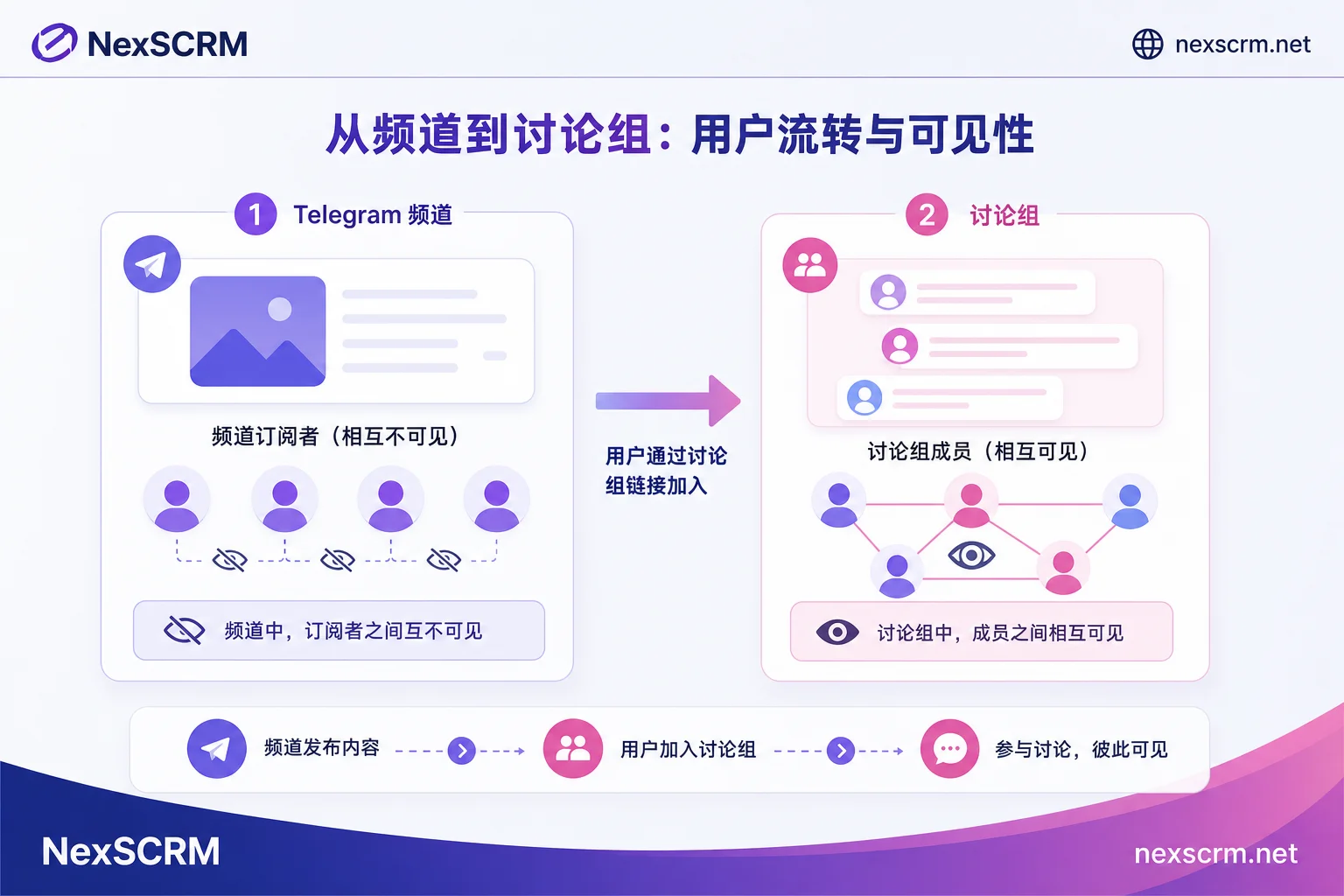
Insights from the Case: Mechanism Differences Determine Action Placement
To solve this dilemma, you need to clarify the difference between Telegram channels and groups. The differences lie in who can speak, whether the member list is visible, and member limits. Supergroups have a member cap of 200,000; members can view each other's profiles and freely speak, and admins can finely control permissions like media sending and voting, with options like slow mode and topic sections. Industry practice combines both: by binding a discussion group to pull comments on individual posts into the group, forming a chain of "channel broadcast -> group interaction -> private chat conversion," rather than choosing one over the other.
| Dimension | Telegram Channel | Telegram Group |
|---|---|---|
| Posting permission | Only creator and admins can post | All members can freely speak by default |
| Member limit | No limit on subscribers | Supergroup limit: 200,000 members |
| Visibility | Subscriber list hidden from each other | Members can view each other's profiles |
| Core function | One-way notifications, product launches | Q&A interaction, centralized order changes |
One-Way Touch Actions Suitable for Channels and Common Misconceptions
Actions channels truly handle include product launches, quote updates, logistics and arrival notifications, and event announcements—content that needs delivery but not responses. Its strengths are no noise, unlimited subscriber scaling, and view counts to measure reach. Common misconceptions fall into three categories: first, putting Q&A in channels leaves customers no place to ask; second, expecting to do one-on-one follow-ups within channels; third, thinking enabling comments equals building a community—actually, comments happen in the bound discussion group. The right approach is for channel posts to take on steering duties, making the path clear within the post itself, e.g., "Click the link to join the discussion group for inquiries," serving as a key element in overseas social media customer acquisition.
Pre-Sales Q&A and Centralized Order Changes in Groups
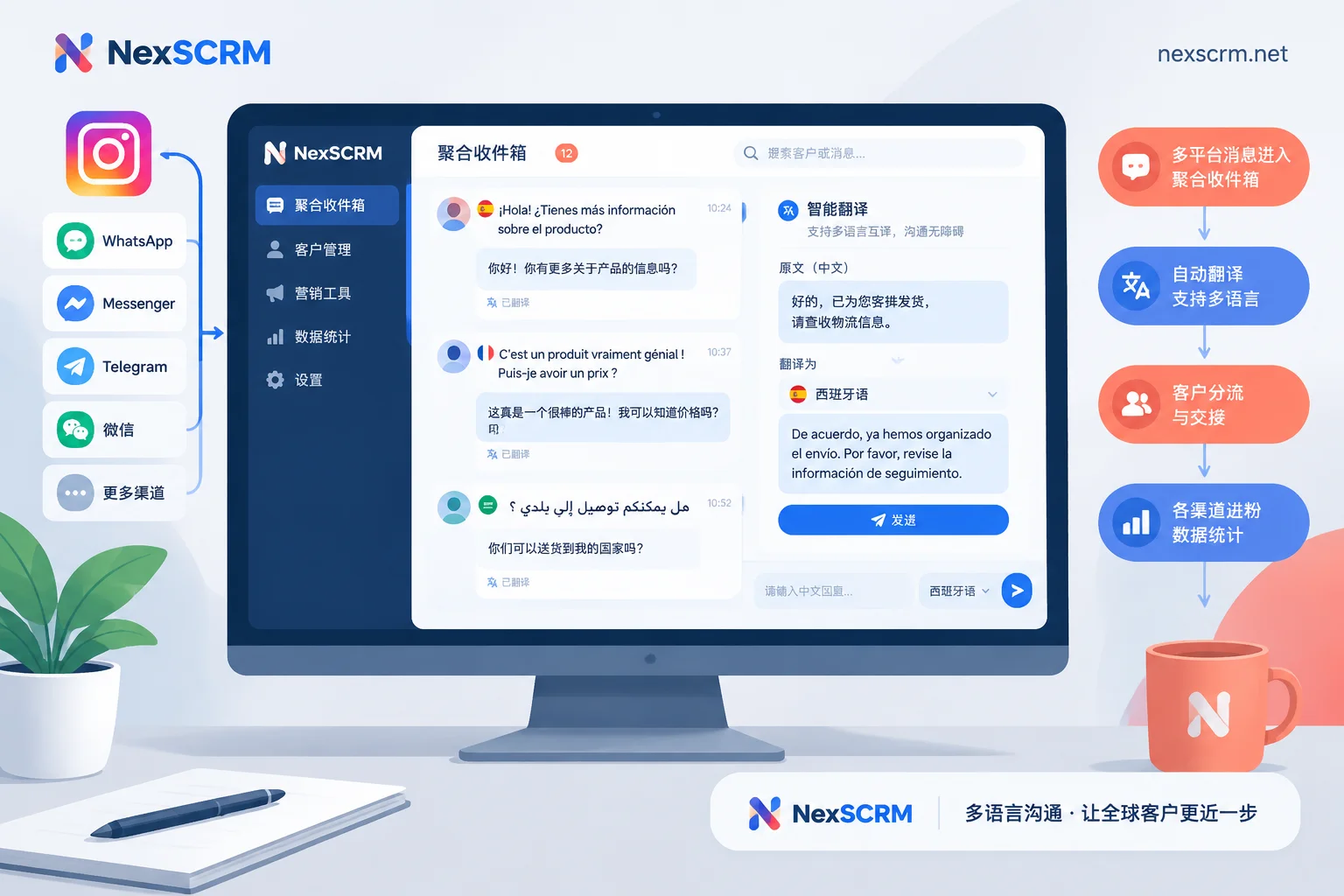
Groups are mainly for pre-sales centralized Q&A, addressing common questions from similar customers once, handling order changes and confirmations during events, and fostering community activity and member referrals. But groups aren't necessarily better when bigger; multi-directional free speech brings risks of ad spam and message chaos, requiring slow mode, topic sections, and admin permissions to control. For specific troubleshooting: when multilingual customers ask in foreign languages in the group and also follow up on the same order in private chats, first confirm if these two conversations point to the same customer profile. This step can be handled with NexSCRM's Telegram multi-account aggregation sessions and real-time two-way translation, storing both original and translated text together, then reviewing message and marketing stats to see which side truly generates inquiries, avoiding context breaks. This is also the foundation for fine-grained private domain customer operations.
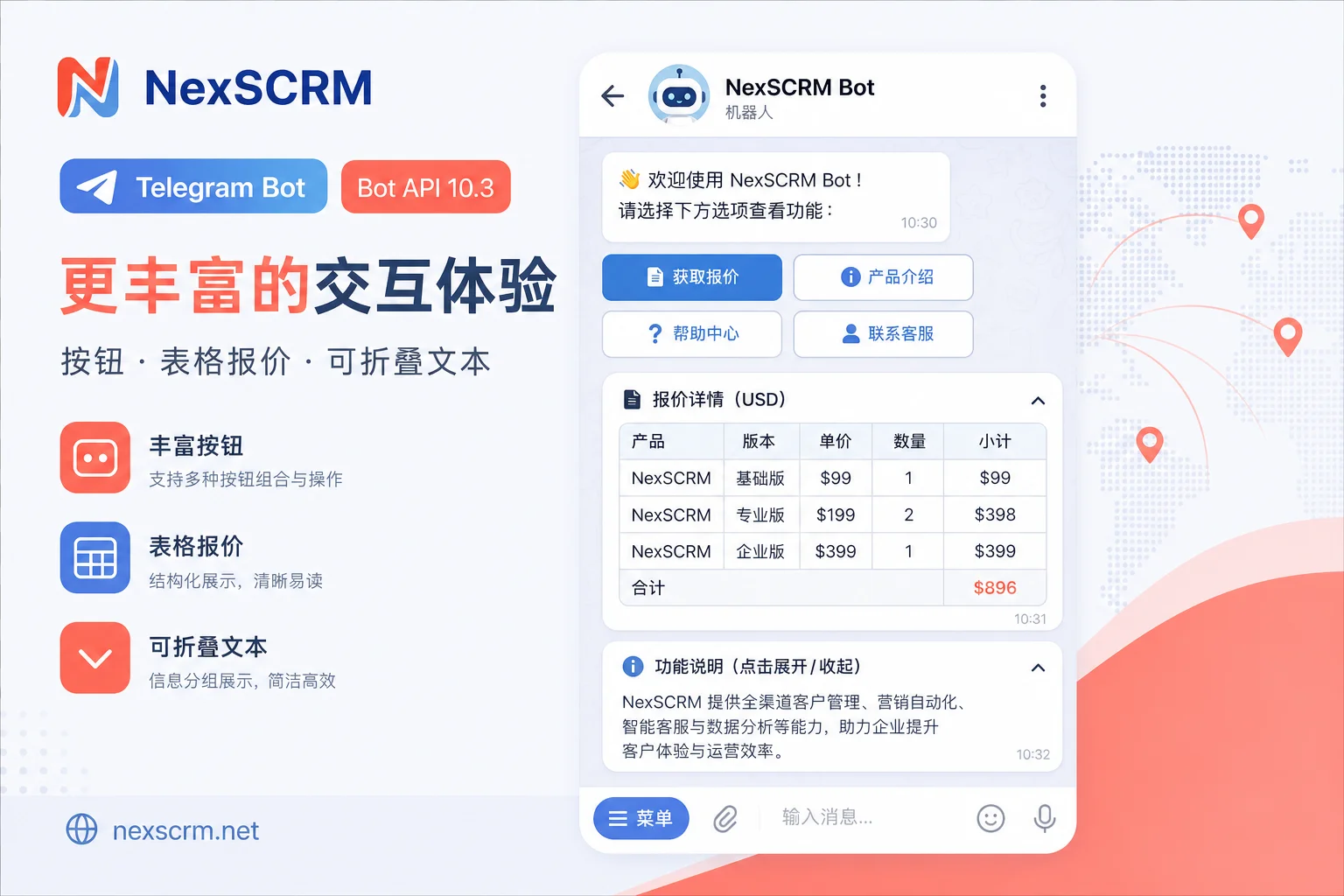
How to Use Bot API 10.3's Welcome Permissions and Rich Interactive Buttons
On August 24, 2026, Telegram released Bot API 10.3, adding the can_send_welcome_messages permission field to ChatAdministratorRights and ChatMemberAdministrator. This field governs how the welcome capability is authorized; whether it spams depends on the bot's implementation and use of temporary message parameters. It also adds RichMessageButton and RichTextButton, table support for is_compact mode, collapsible RichBlockExpandableBlockQuotation blocks for quotes, EphemeralMessageParameters for temporary messages, and replace_callback_query_message for in-place replacement. These updates let quotes and specs fit in one screen within groups, long terms can be collapsed, and menu interactions don't clutter messages, aiding customer service automation. Note that cross-language real-time two-way translation, agent session assignment, and customer profile archiving across channels and groups are not built into official 10.3 and still require external systems.
Path from Telegram Channel to Private Chat
For driving traffic from a Telegram channel to private chats, the full path includes: embedding a t.me username or bot direct link in posts, using rich interactive buttons to route clicks to designated conversations, and using the bound discussion group as an intermediate step where customers first speak up before being guided to private chats. The premise is that conversations must be initiated by the customer clicking voluntarily, so the reason given in the post (e.g., "Get the latest price sheet," "Request a sample") matters more for conversion than the button itself. For multilingual scenarios, if you're worried about not understanding foreign language messages in group chats, it's advisable to archive both original and translated text on the conversation side and assign agents based on language and time zone, rather than publicly attaching a translation bot in the group to avoid leaking quotes. Additionally, channels don't offer capabilities to force-initiate private chats or export subscriber contact information.
If You've Set Up Your Course Wrong: Reversing and Migrating Customers
If you've been treating a channel like a group, the corrective action is to create and bind a discussion group, move content that requires responses entirely into the group, while the channel only retains broadcast posts with direct links added to each. If a group is out of control, enable slow mode and topic sections first, restrict media sending and member addition permissions to stop the bleeding, then standardize welcome messages per the can_send_welcome_messages spec. The key insight: channel subscribers don't automatically become group members or friends; you must re-guide them through content to click voluntarily. So rollbacks should be done in batches with an overlap period, not abruptly shutting down the old base. To gauge if the reversal works, look at how many people actually speak up, not the sum of numbers on both sides.
FAQ
Can I privately message customers from a Telegram channel?
No, not directly. Channel subscriber lists are hidden from each other, and the platform doesn't provide permissions to force-start private chats or batch scrape contacts. You must embed direct links in posts, use rich interactive buttons, or guide to a discussion group; only after customers click voluntarily can you establish one-on-one conversations.
How to set up a Telegram group welcome message bot?
Use the can_send_welcome_messages field added in Bot API 10.3 to grant the bot welcome permissions. Combined with EphemeralMessageParameters for temporary messages, you can achieve non-intrusive welcome messages without spamming, improving new member experience.
How to avoid spam when configuring new member onboarding?
Use the can_send_welcome_messages field added in Bot API 10.3 to grant the bot welcome permissions. Combined with EphemeralMessageParameters for temporary messages, you can achieve non-intrusive welcome messages without spamming, improving new member experience.
How to translate foreign language messages containing order information?
First, ensure both original and translated text are archived together under the same customer profile. Second, since real-time two-way translation isn't built into the official platform, rely on external SCRM systems to aggregate multi-account sessions and provide real-time translation, preventing sensitive commercial quotes from leaking publicly or context breaks.
Which is better for product launches: channel or group?
A channel is better because it supports unlimited subscribers with no noise, and posts come with view counts, maximizing reach. Groups serve as a discussion and feedback pool for new products, handling initial customer questions.
If your channel, group, and private chats are already running separately but customer context often doesn't align, start by consolidating these three conversation areas into a single customer profile to review, then decide whether to adopt tools like NexSCRM for aggregated sessions and real-time translation to fill the archiving gap.


Comments(0)