 NexScrm官方博客
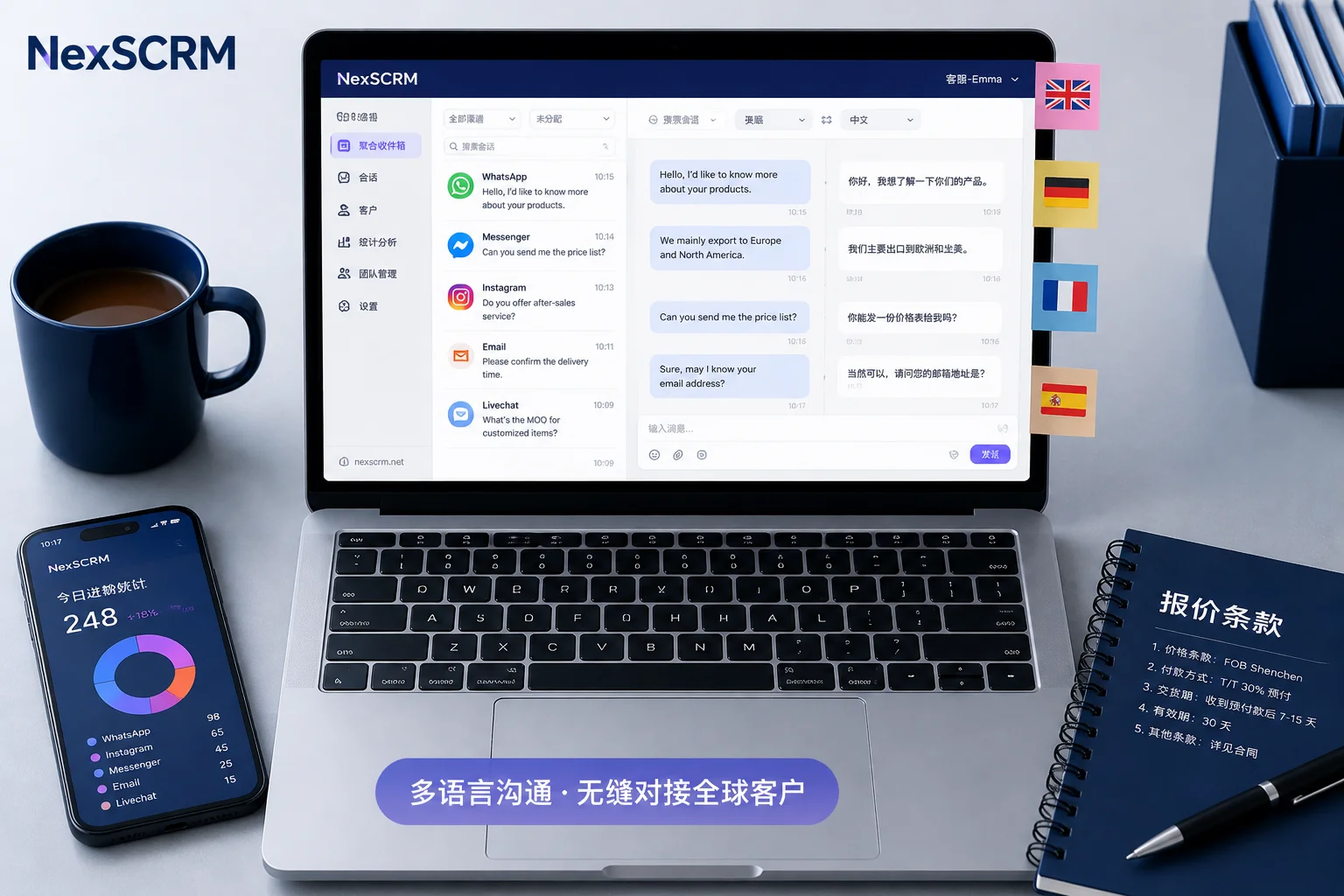
Key Considerations for Choosing Multilingual Chat Translation Software for Foreign Trade: Measure Four Numbers First, Then Verify These Five Things
When choosing multilingual chat translation software, first clarify four numbers: how many platforms to connect, how many accounts online simultaneously, which languages, and who will use it; then verify six areas one by one: bidirectional translation with source text comparison, multimodal and line redundancy, multi-account aggregation and anti-association isolation, context retention and handover, team scripts and internal controls, billing and free trial acceptance.
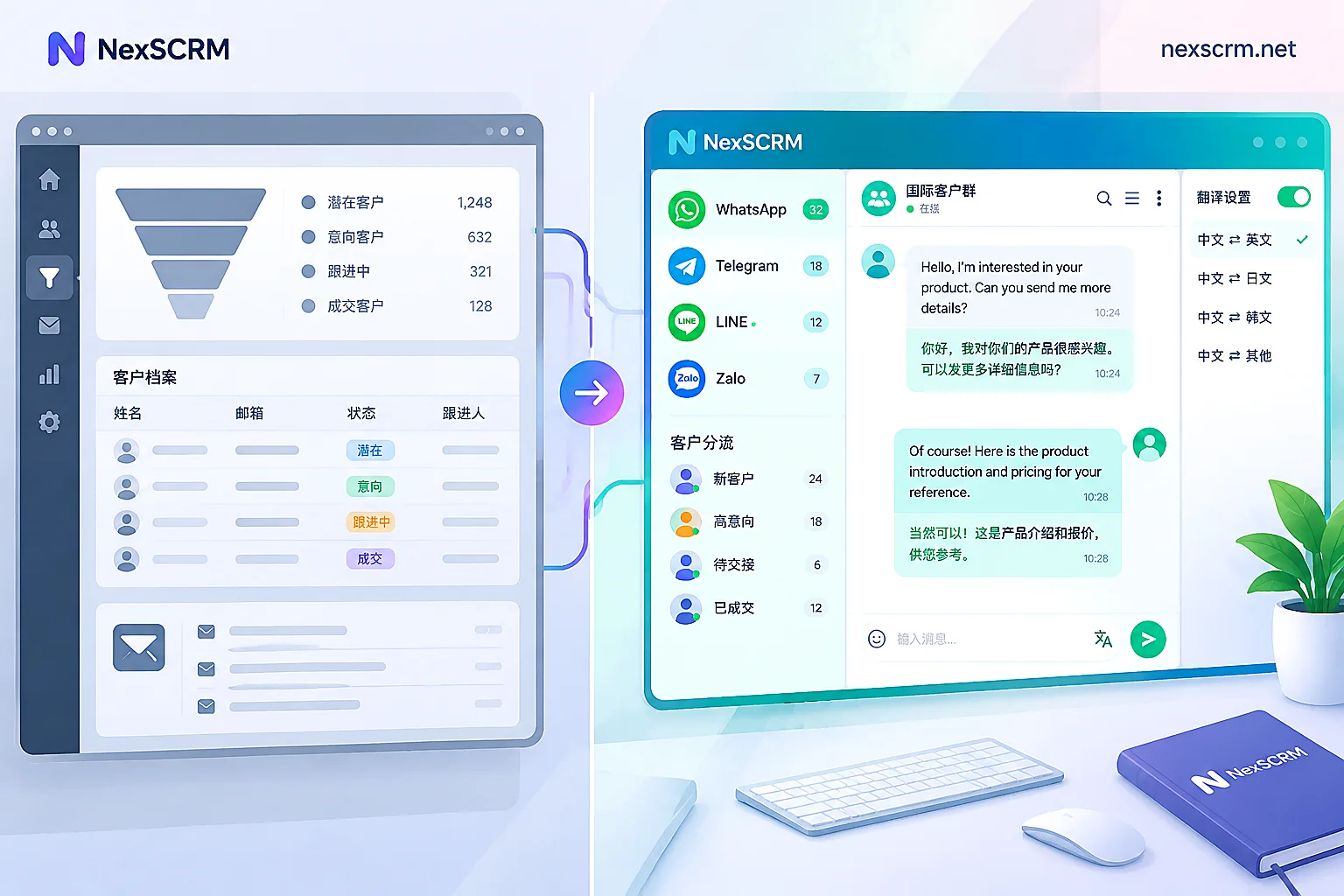
Traditional CRM vs. Cross-Border Social Media SCRM: Where Customer Conversations Happen, and Seven Questions for Selection
Traditional CRM manages deal pipelines and customer profiles, while cross-border social media SCRM manages instant conversations themselves on WhatsApp, Telegram, and similar platforms. This article helps teams judge which tool they need based on business scenarios, or whether they need both, then lists seven questions to verify one by one during selection: multi-account aggregation, translation, account environments, record handover, internal controls, lead counting, and billing models. It ends with a one-week trial plan.
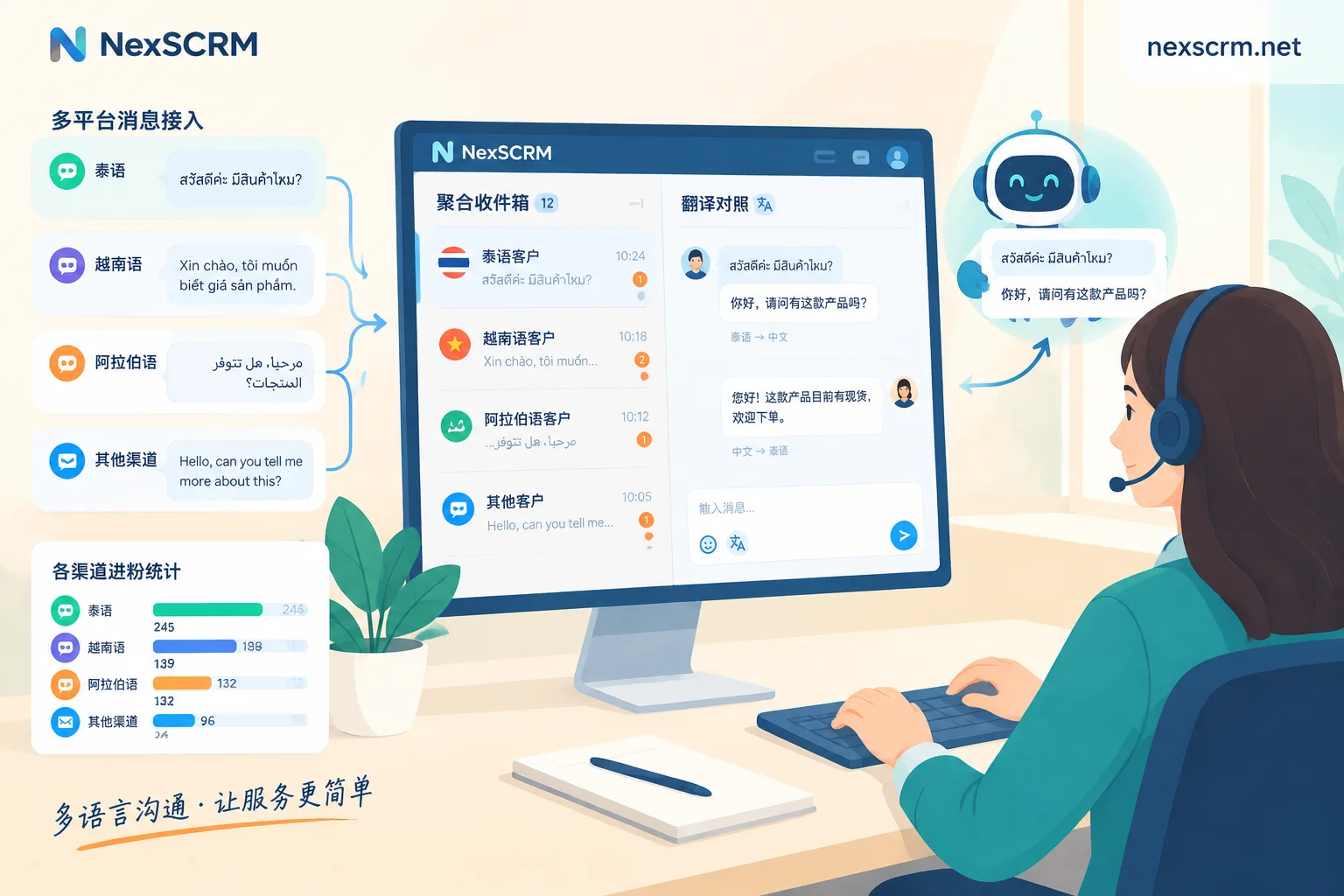
How to Implement Multilingual Automated Customer Service Without Harming Customer Experience: Define Boundaries, Use Vetted Scripts, and Keep a Human
Effective multilingual automated customer service isn't about letting bots handle as many inquiries as possible, but about having them only answer what they can answer accurately. This article outlines six steps in launch order: first define the automation scope, use vetted templates for automated foreign-language messages, state clearly in the first message that it's an automated reply, set handoff conditions to human agents, ensure human agents receive full context and cross-check against the original text, and after launch continuously fill gaps based on handoff reasons.
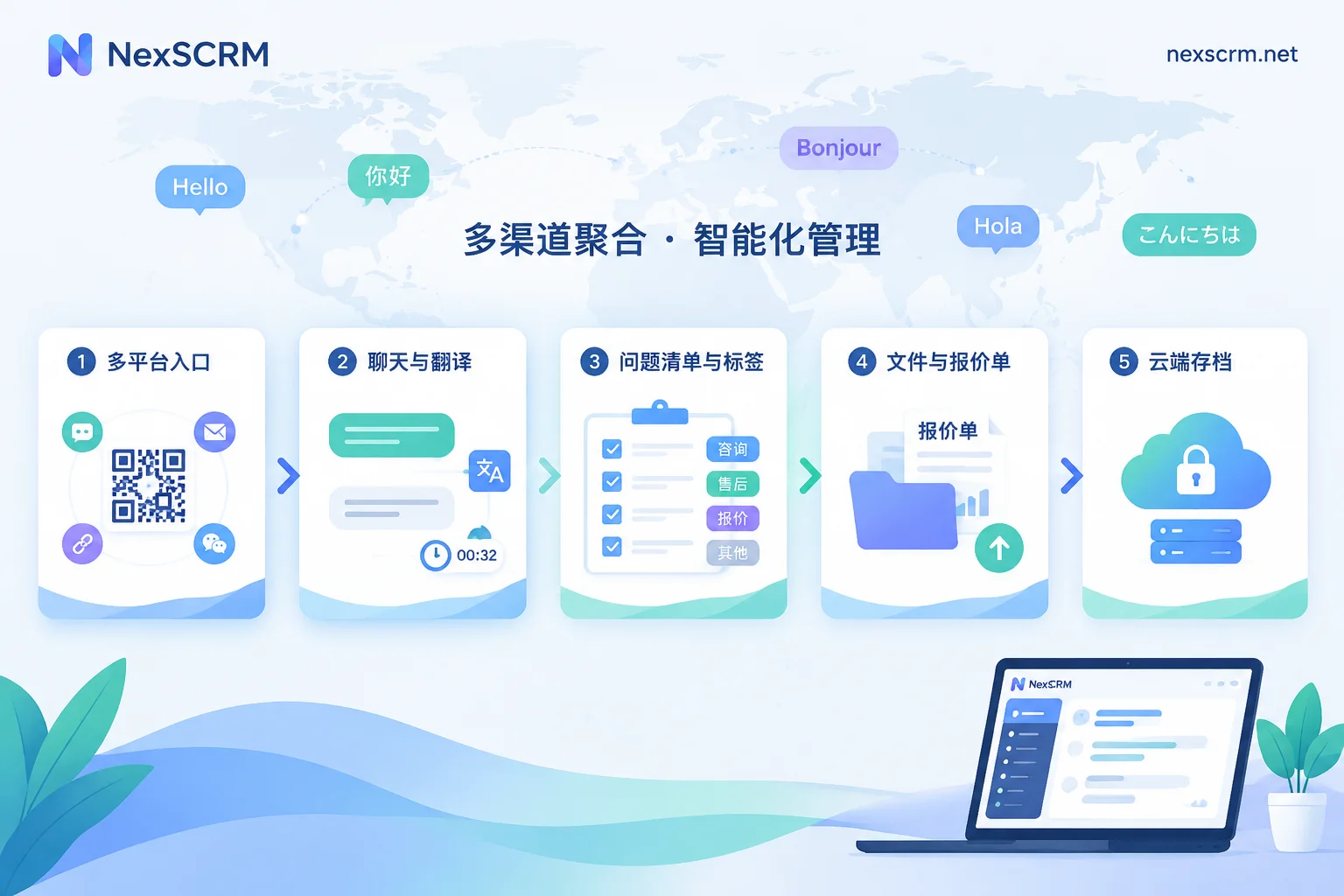
How to Write a Cross-Border B2B Overseas Private Domain Operations SOP: A Five-Stage Process from Lead Intake to Handover and Internal Control
Cross-border B2B teams shifting inquiries from email to WhatsApp, Telegram, LINE, and Zalo can structure an SOP around five stages—intake, first response, intent qualification, stage-based follow-up, and handover/internal control—and define each stage's owner, time limit, and required records. This article provides concrete steps for each stage, examples of tiered questions, a follow-up stage reference table, and a handover note template, while clarifying the boundaries of compliant intake and data measurement.
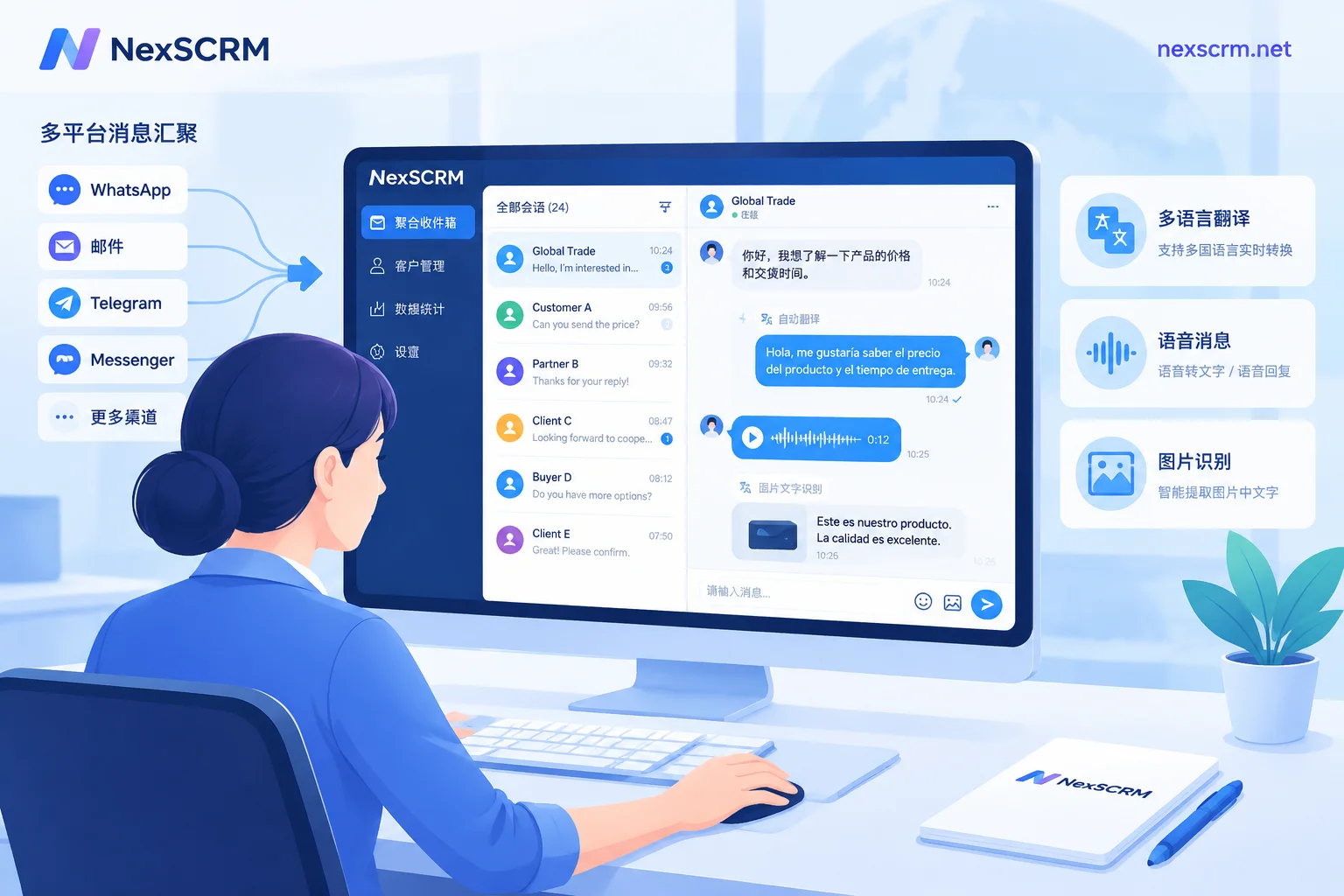
Five Steps to Keep Up with Overseas Customers Using AI Tools When Your Foreign Language Isn't Enough
A five-step method for embedding translation, verification, and replies directly into chat windows so foreign trade salespeople can communicate with overseas customers without first improving their language skills.
