 NexScrm官方博客
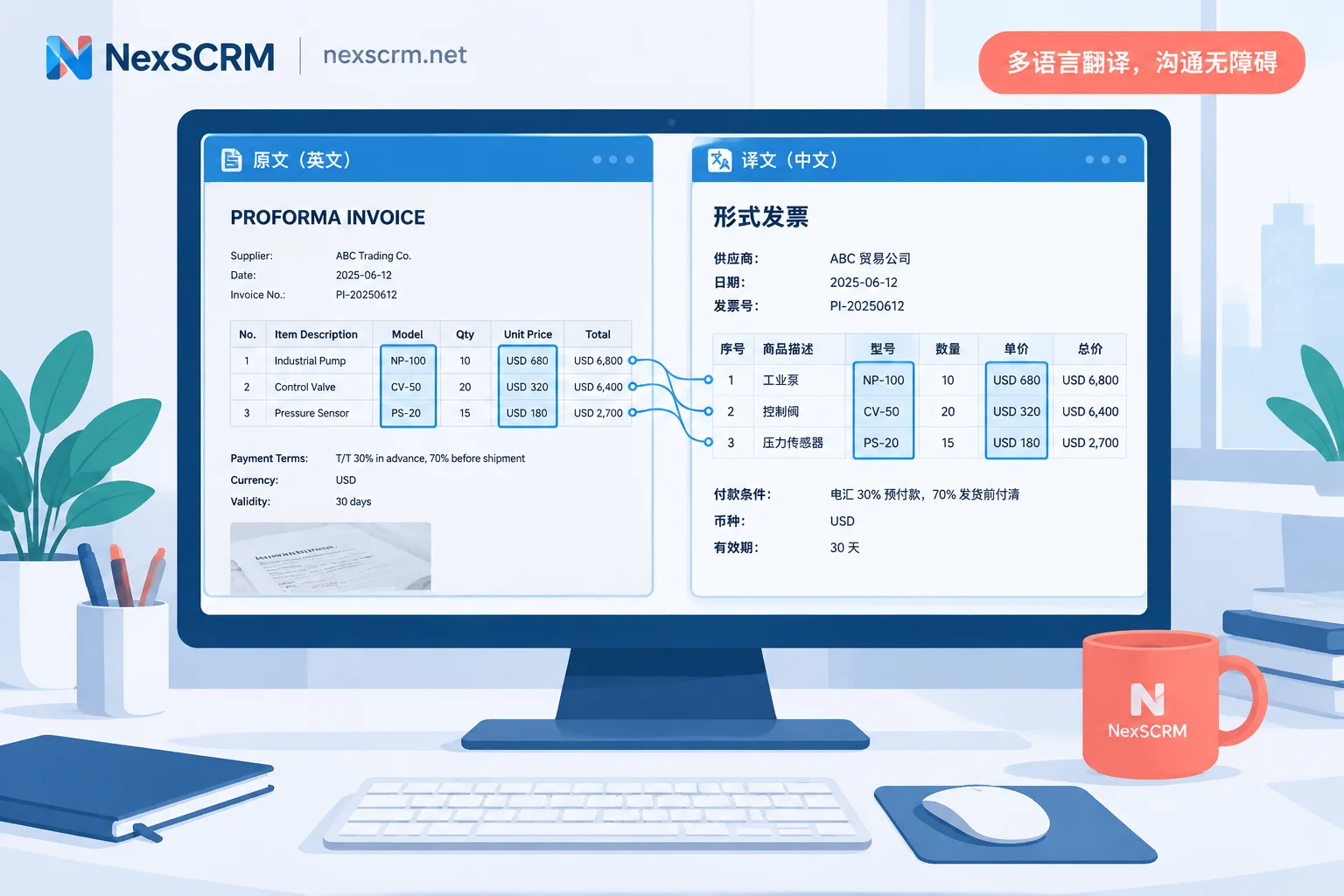
How to Translate a Customer's Image Quotation: First Circle the Columns You Shouldn't Translate
When an overseas customer sends a screenshot of a quotation on WhatsApp or Telegram, dropping the whole image into a translation tool often leads to errors in model numbers, currencies, and trade terms. This article walks through the actual sequence: which fields must be locked and left untranslated, why overlay-style image translation can cover up numbers, how to reconcile the original image with the translated version, which images you shouldn't trust OCR on, and how to confirm uncertain terms with the customer before quoting.
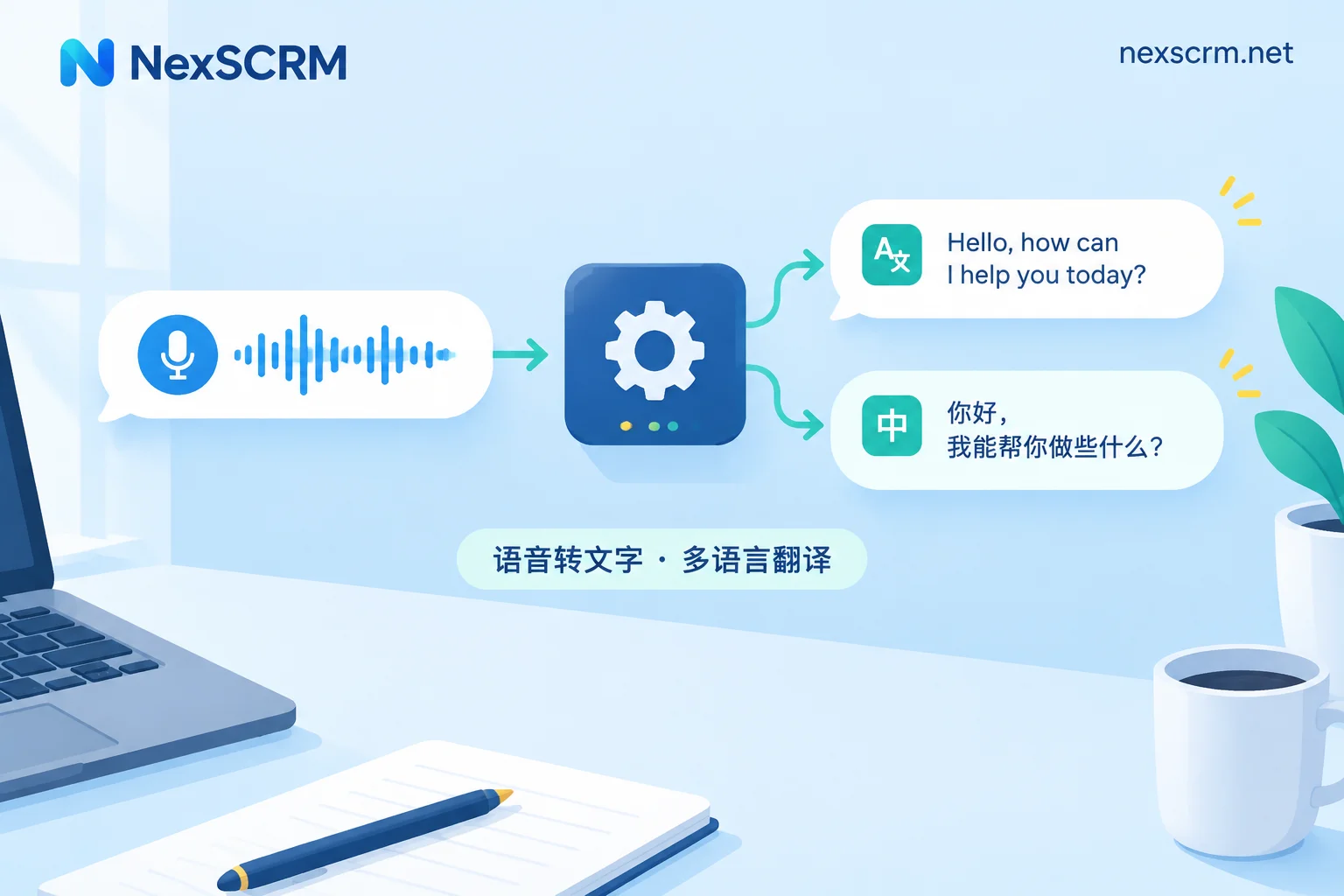
Can Customer Voice Messages Be Translated into Chinese Directly? Platforms Only Do Half the Job
WhatsApp and Telegram voice-to-text only transcribes in the customer's spoken language, not Chinese. To see Chinese directly in the chat interface, you need to combine voice transcription and text translation. This article explains the boundaries of native platform capabilities, when manual two-step is sufficient, why voice translation must preserve the original, and how to read back and confirm numbers, models, and addresses.
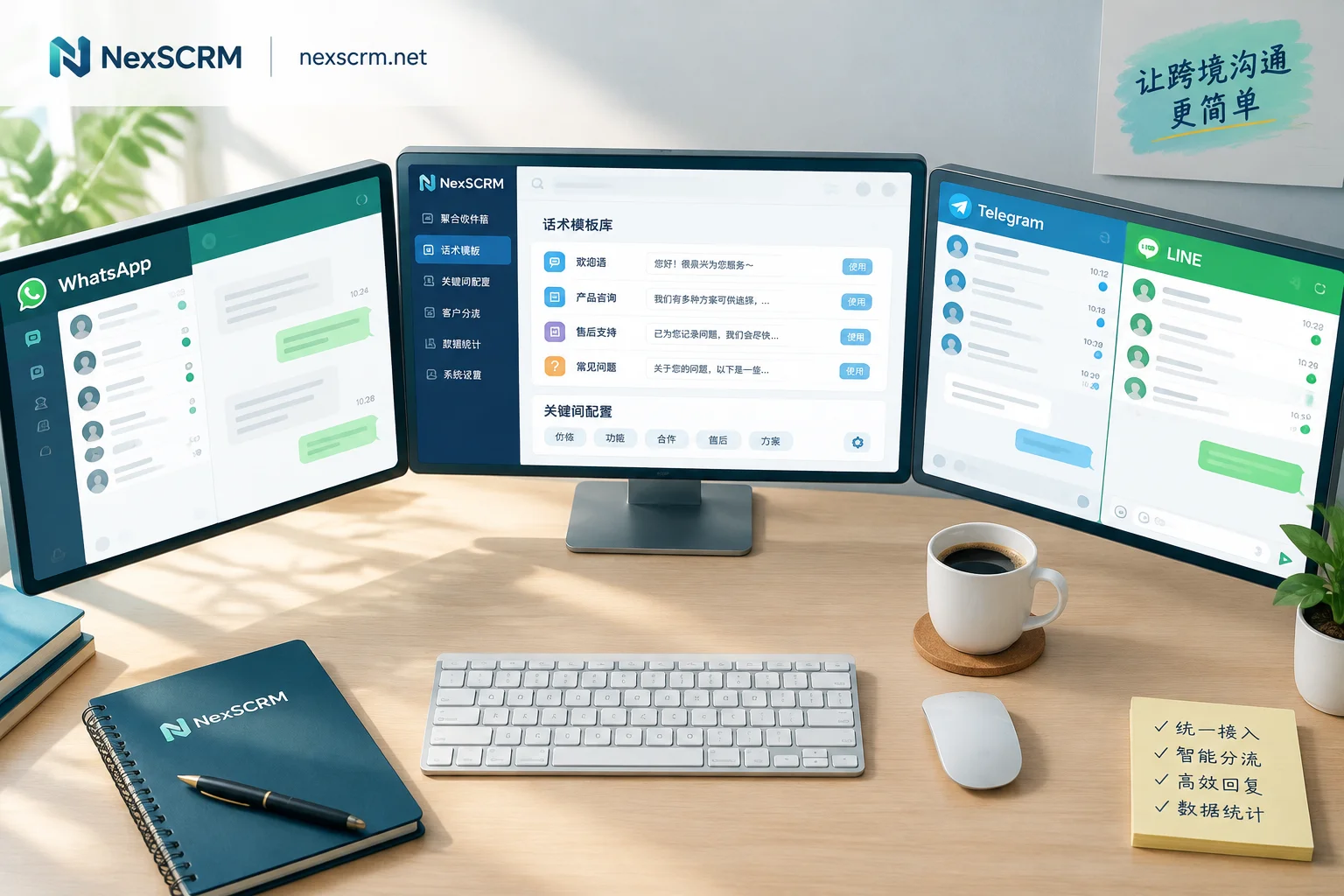
How to Set Up Keyword Auto-Reply and Greeting Messages: Trigger Mechanisms on WhatsApp, Telegram, LINE and Unified Multi-Account Configuration
A guide to configuring greeting messages and keyword auto-replies on WhatsApp Business, Telegram Business, and LINE Official Account, covering trigger conditions, platform limitations, native backend entry points, and unified management for multi-account matrices with translation and collaboration.
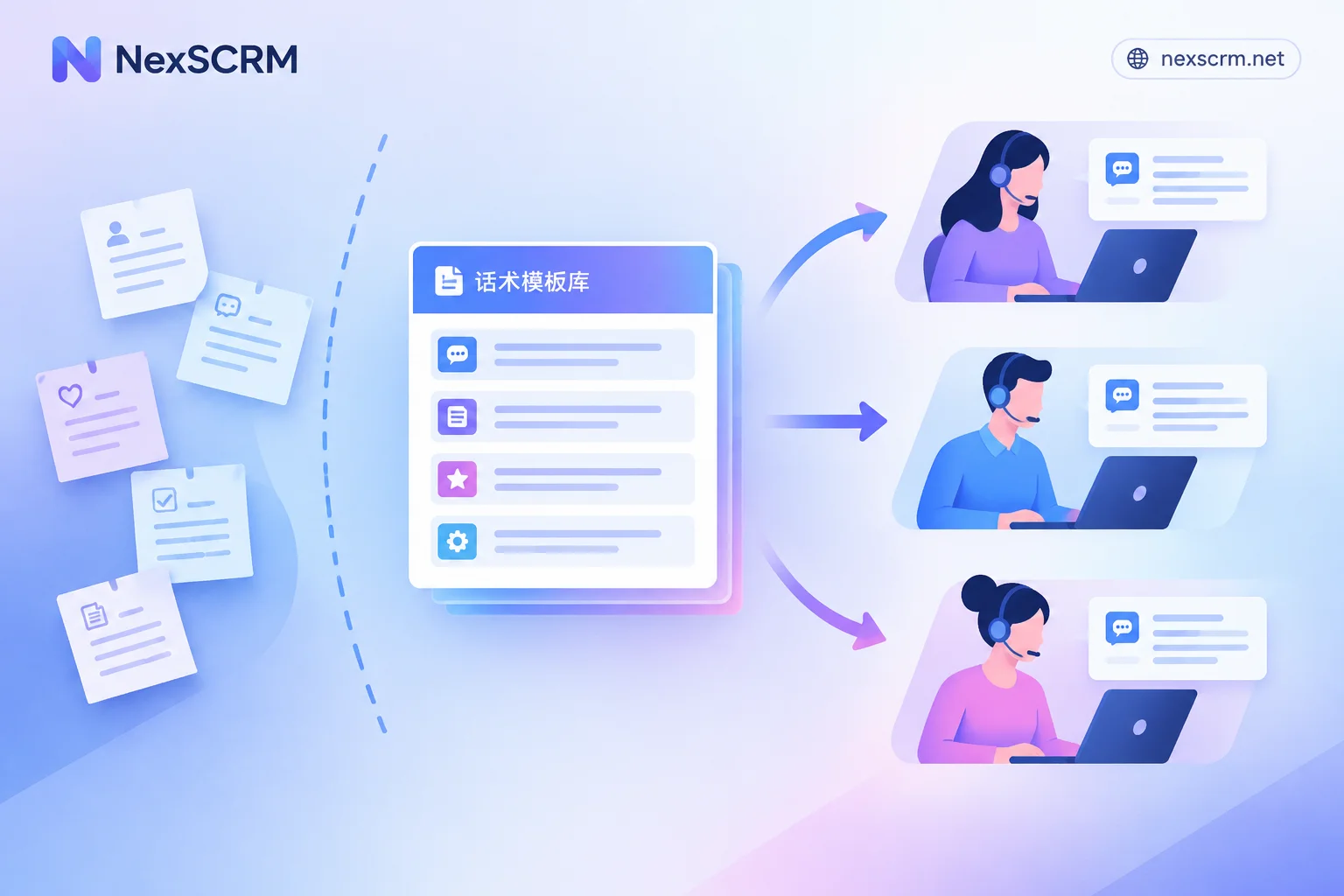
How to Align Your Entire Team's Answers with Shared Script Templates: Start by Knowing What Must Never Be Changed
Three support agents gave three different minimum order quantities—not because of memory, but because their scripts were scattered across personal notes. This article provides a step-by-step, actionable approach: classify scripts into rule-based and skeleton types, build five master templates around the customer journey, use two-level naming for searchability, centralize creation and editing rights with supervisors, and audit real chat logs to verify that what was sent matches the library—plus why translated versions must be finalized alongside the Chinese master in multilingual scenarios.
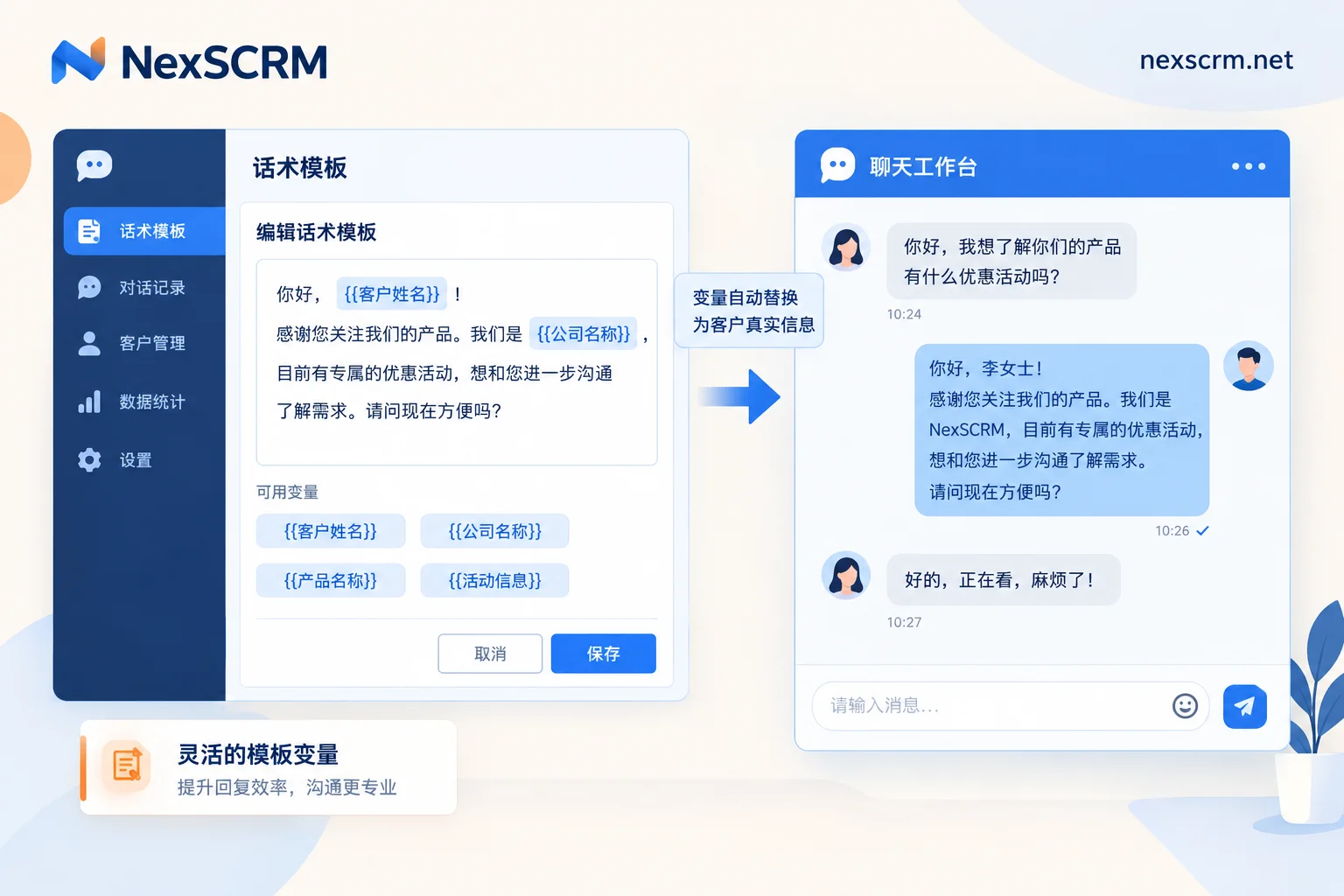
How to Use Variables in Quick Reply Templates to Automatically Fill Customer Names: Miss One of Three Prerequisites and You'll Send "Hi ,"
Whether a variable can automatically fill in the customer name depends on whether the tool parses placeholders, whether the current conversation is linked to a contact field, and whether there is a fallback for empty values. This article explains these three steps in configuration order, covers cross-platform naming differences, how to handle pure numbers and emoji nicknames, and where variables should go in multilingual templates.