 NexScrm官方博客
Let me start with the conclusion: For the same customer, in the same conversation, you will need both lines.
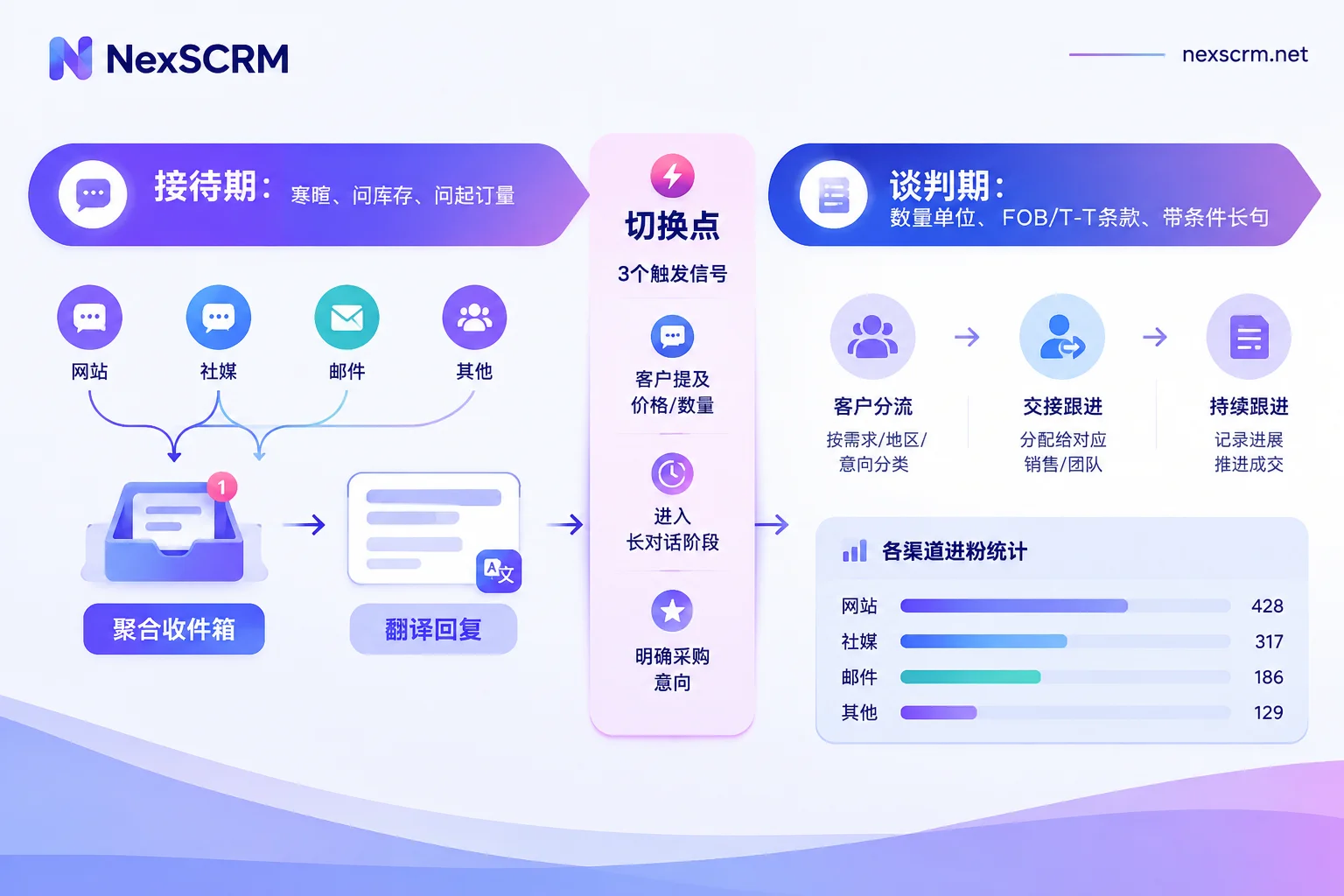
For daily reception — greetings, asking if they are online, asking if something is in stock, asking about MOQ — the broadest-coverage general machine translation line is enough. Its value is speed and the ability to handle any language. But once the conversation moves into specific quotes, specifications, lead times, and payment terms, switch to the line that handles business tone and long-sentence logic more rigorously. Its value is parsing a convoluted business English sentence into the correct subject, verb, and object, so that "if payment is not received within 15 days" does not become Chinese that sounds like a threat.
Treat the line as a default setting, rather than agonizing over every message: broad line by default during reception, switch manually once during negotiation, and there is no need to switch back after the negotiation.
When to Switch: Change When Any of Three Signals Appears
You do not need to rely on a feeling of "how deep the conversation is." Just look for these three types of things in the customer's messages:
- Numbers with units: quantity, tolerance, dimensions, power, weight. "20K pcs" and "20 kits" differ by two orders of magnitude, and broad lines tend to guess based on common corpora when handling such abbreviations.
- Trade terms and payment methods: FOB, CIF, EXW, T/T 30%, L/C at sight. These terms themselves should not be translated, but the qualifiers around them (which port, when the balance is paid, against documents or against goods) must be translated accurately.
- Long sentences with conditions: If you see unless, provided that, subject to, in case of, the other party is defining the boundaries of liability. If a negative word in such a clause is translated the wrong way, you will have to clean it up by email later.
On the other hand, if the customer is still asking "Do you ship to Chile?" or "What's your MOQ?", there is no need to switch. Switching itself has a cost — you have to remember to switch back, otherwise the next minor-language customer who just came in may hit a line with incomplete coverage.
What About Minor-Language Customers: Refined Lines May Not Cover Them
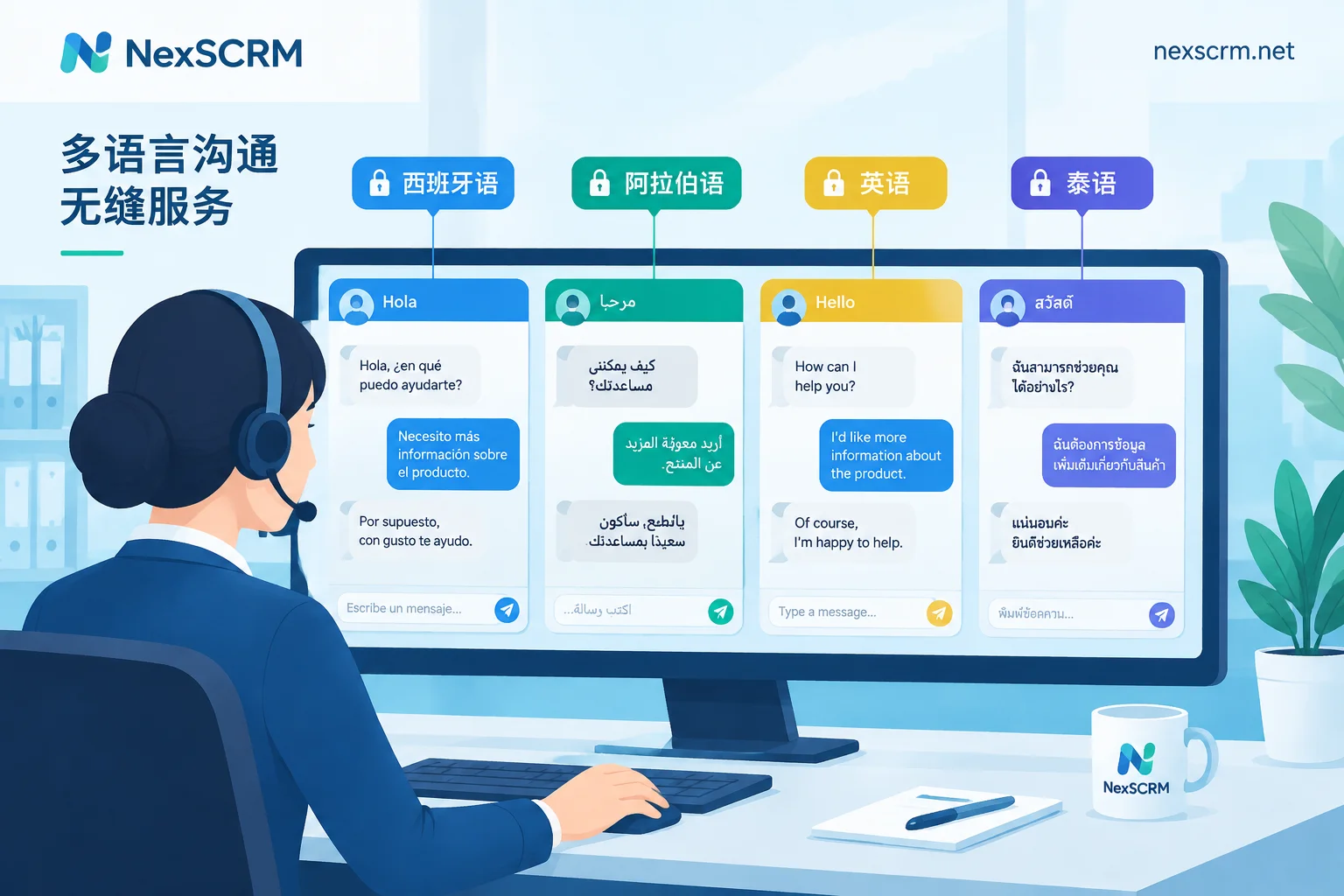
This is the most often overlooked premise. The lines that handle business tone better are strong mainly in English and major European languages such as German, French, Spanish, and Italian, as well as some major Asian languages. The broad general line can cover over one hundred to two hundred languages and dialects. So when the customer speaks Arabic, certain Vietnamese dialects, or a minor Central Asian language, you may very well not be able to switch to the more rigorous line.
In that case, do not force a switch. Fall back in the following order:
- For key terms during negotiation, directly write them in a common language acceptable to both sides (usually English), then have the customer confirm. This is not a detour; many overseas buyers are already used to negotiating contracts in English.
- Send key numbers and terms in a fixed format, such as
Qty: 20,000 pcs / FOB Ningbo / T/T 30% deposit. Structured short lines are harder to mistranslate than full paragraphs of narrative. - After sending, ask the customer to repeat the key items back ("Please confirm: 20,000 pcs, FOB Ningbo"). Use their reply as verification, not your translation.
Why You Should Not Switch Directly to LLM Translation During Negotiation
LLMs really do understand context and cultural nuance better, and letting them polish long documents and marketing copy is the right move. But in instant chat there are two hard drawbacks: first, slow response — dedicated neural machine translation usually has stable latency in the hundreds of milliseconds, while LLMs are noticeably slower, and the customer is watching "typing..." on the other side; second, they may improvise, adding conditions you did not write or making the tone more enthusiastic and more committal than the original. Quote negotiation needs determinism — the same input should always produce the same output, not one word more.
So during negotiation, prioritize dedicated translation lines, and save LLMs for after-the-fact help with "what exactly did the customer mean by this?" rather than putting them in the send/receive chain.
No Matter Which Line You Use, Keep Both Source and Translation
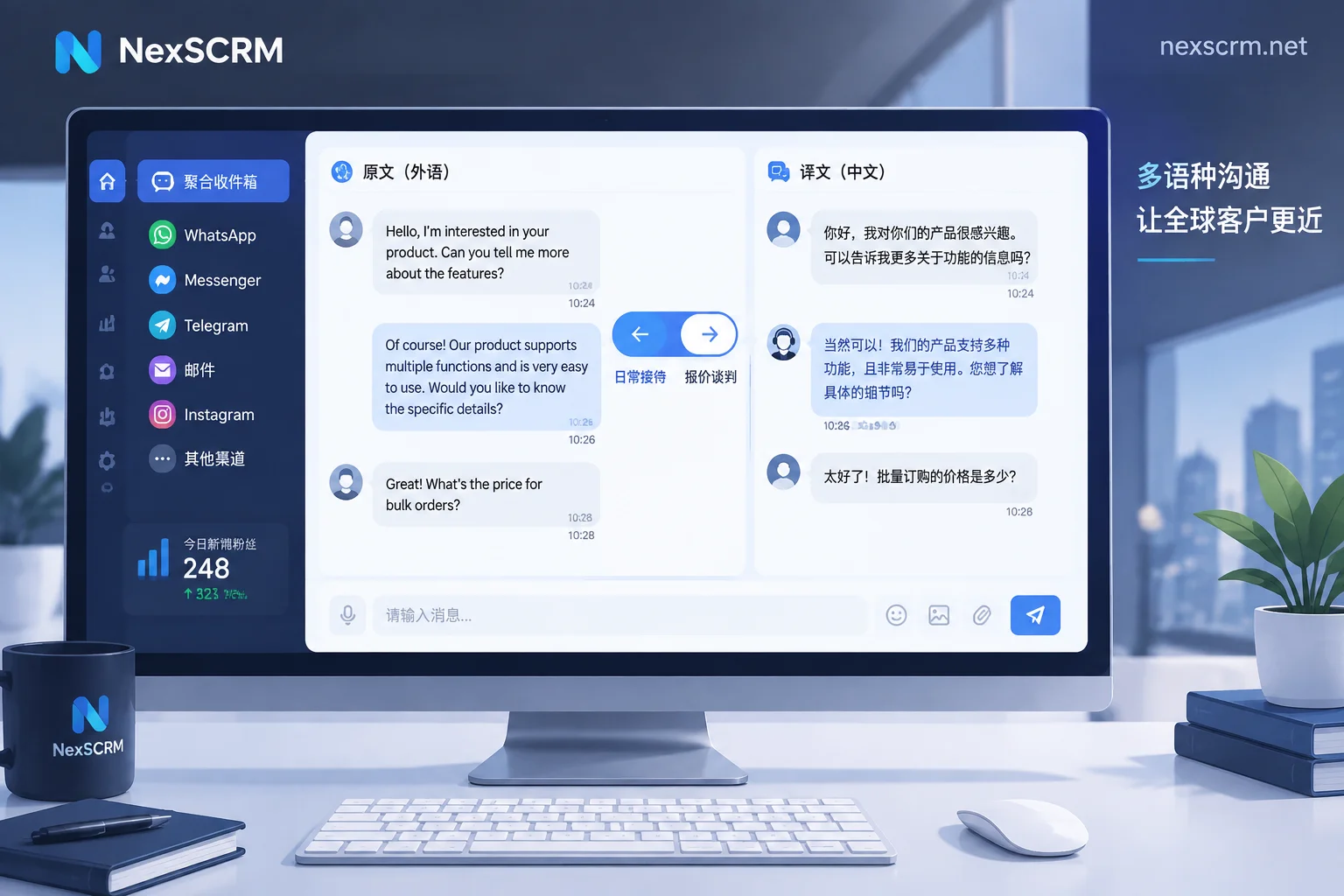
This is the most practical risk-control rule in international communication: keep both the source text and the translation in both directions. Keep the customer's original messages and keep the translations you send out, so both sides can be compared at any time.
The reason is straightforward. Translation is a black box. If you only look at the Chinese translation, you will never know whether "30% deposit" was translated as "30% balance" or "30% deposit" — and by the time you reconcile before shipment, the money has already been collected incorrectly. The same applies to what you send — if you write "expected to ship within 15 working days," and the translation comes out as "guaranteed within 15 days," its nature changes from an estimate to a commitment.
In practice, build two habits: before sending key terms, scan the translation to see whether the numbers and currency symbols match the original; and when a condition you have never seen before appears in a customer reply, look at the original first, then the translation.
How to Implement This in the Workspace
If you use NexSCRM to handle customers across multiple platforms, real-time two-way translation itself supports multiple optional lines that can be switched per conversation, and the original text and translation are kept simultaneously in the chat window — no need to open a separate translation tool and copy-paste back and forth. Beyond text, images and voice messages from customers can also go through translation — quote screenshots and voice messages are the two types of information most easily missed in foreign trade scenarios. For details on how to handle them, see How to translate an image quote sent by a customer and Can a customer's voice message be translated directly into Chinese?.
Which specific lines are available in the client, and how different versions and port tiers differ, should be based on the official website and the instructions in the client. Do not match the examples in this article one by one. If you want to try the actual effect of line switching on your own customers first, there is a free trial on the official website.
Two Configuration Problems That Are Easy to Stumble Into
One account serving customers from multiple countries can mix up languages. Automatic detection on the broad line is unreliable for short messages — words like "OK" or "Ya" may be judged as another language. Lock the target language to the specific conversation rather than the account. See How to avoid language mix-ups when one account serves customers from multiple countries.
Everyone on the team has different standards for switching lines. Rather than repeatedly emphasizing it verbally, write "which sentences must go through the negotiation line" into the team's script guidelines, together with standard quote sentence patterns, so new hires can send according to them. For how to unify the wording, see How public script templates keep the whole team's answers consistent.
Ultimately, choosing a line is not about choosing the "most accurate translation," but about acknowledging that daily reception and quote negotiation are two different things: the former is about not making the customer wait, and the latter is about not losing money yourself.


Comments(0)