 NexScrm官方博客
Meta 2026 WhatsApp API Policy Overhaul: How Can Cross-Border Sellers Build a High-ROI WhatsApp SCRM System?
In 2026, Meta released a series of policy and API technical adjustments for the WhatsApp Business Platform. From the latest July billing structure classification (clarifying Service messages vs. Meta Business Agent messages), the rollout of Business-scoped user IDs (BSUID) as contact identifiers, to tightened rules for multilingual AI interactions—these changes directly impact the private domain operations of foreign trade exporters, cross-border customer service teams, and social media marketing agencies.
For cross-border teams accustomed to handling customer communication, inquiry follow-ups, and after-sales service on WhatsApp, relying solely on the official app or a single-device chat tool can no longer meet the needs of compliance risk control, team collaboration, and precise multilingual follow-ups. Enterprises must upgrade from traditional chat models to a WhatsApp SCRM architecture centered on "authorized compliance, multi-account aggregation, real-time translation, and data retention."
1. Meta 2026 Policy and API Adjustments: Three Core Changes Explained
- Billing Structure and Message Classification Clarified
Meta's official developer documentation and latest pricing announcements show that from July 2026, the platform further refined the classification of non-template messages into Service messages and Meta Business Agent messages. For service conversations, the communication logic and cost control mechanisms within the 24-hour service window are undergoing significant adjustments. - Identity Identification and Contact Management Upgrade (BSUID)
According to Meta's developer update logs, the platform is gradually introducing Business-scoped user IDs (BSUID) to accommodate the full rollout of WhatsApp's username system. This means that when collecting and managing customer contacts, enterprises must rely on compliant CRM systems to establish unified customer profiles and prevent identity data gaps. - Compliance Review and Quality Rating Tightened
Meta has stepped up control over unauthorized mass messaging, high-frequency spam marketing, and non-compliant AI chats. Violations will directly trigger account throttling or even bans. Compliant, user-authorized two-way communication has become the foundation for enterprise private domain survival.
2. Operational Pain Points for Cross-Border Teams: Communication, Collaboration, and Data Gaps
In actual overseas business, foreign trade sales and cross-border customer service teams often face the following four major bottlenecks:
- Language barriers and communication delays: Dealing with multilingual customers (Spanish, Arabic, Thai, etc.), manual copy-paste translation is inefficient and easily misses the optimal response window.
- Team collaboration and agent assignment difficulties: Shared accounts among multiple sales reps lead to order conflicts and missed orders; decentralized management of multiple accounts prevents unified data aggregation.
- Customer asset loss and risk control: Employee turnover takes away customer contact information, and lack of conversation backups makes it difficult for enterprises to retain private domain digital assets.
- Cross-platform management complexity: Customers in different markets are spread across various social apps like WhatsApp, Telegram, LINE, and Zalo, requiring customer service staff to constantly switch between multiple apps.
3. Responding to New Regulations: How to Build an Efficient Private Domain Workflow with NexSCRM
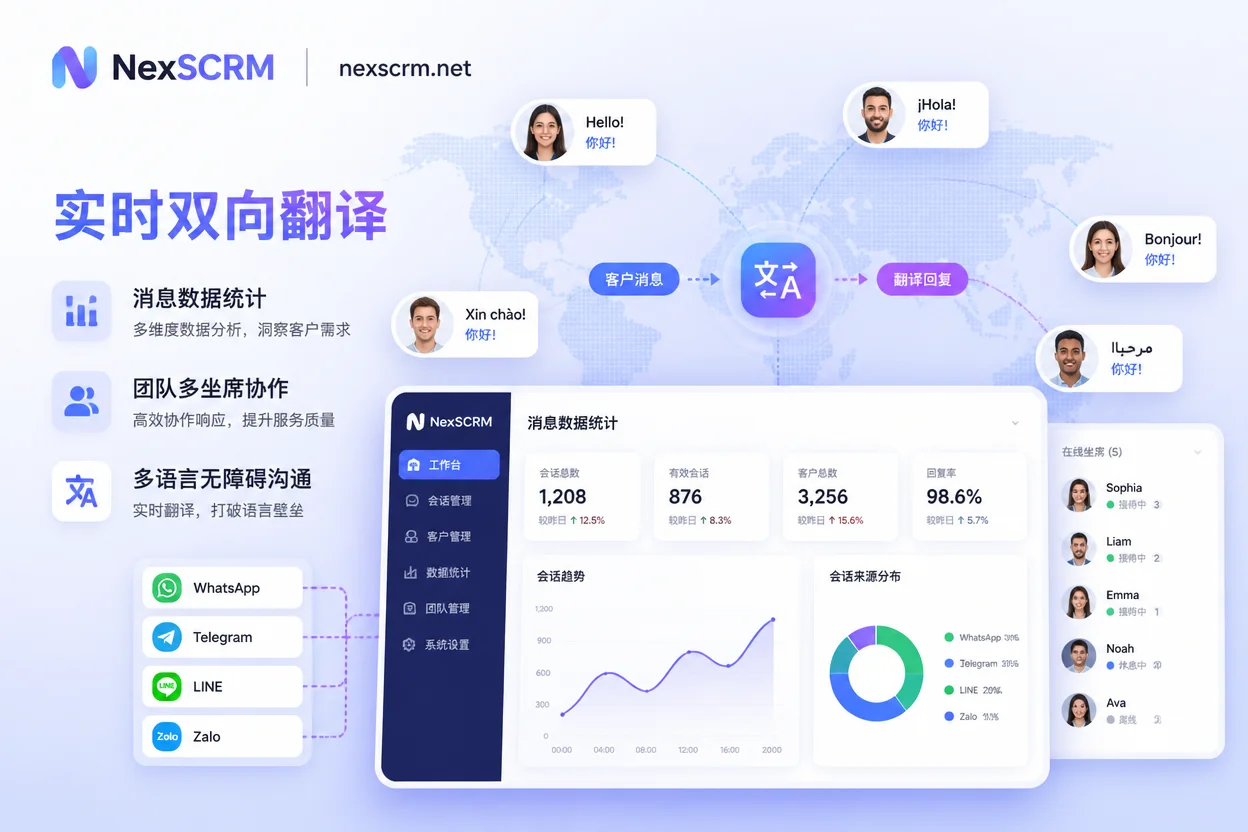
Facing platform new regulations and operational challenges, enterprises need to choose solutions that can adapt to multiple channels, ensure environment independence, and possess deep automation capabilities. NexSCRM, as a global chat translation and aggregation marketing system, provides cross-border enterprises with a path to address platform policy evolution:
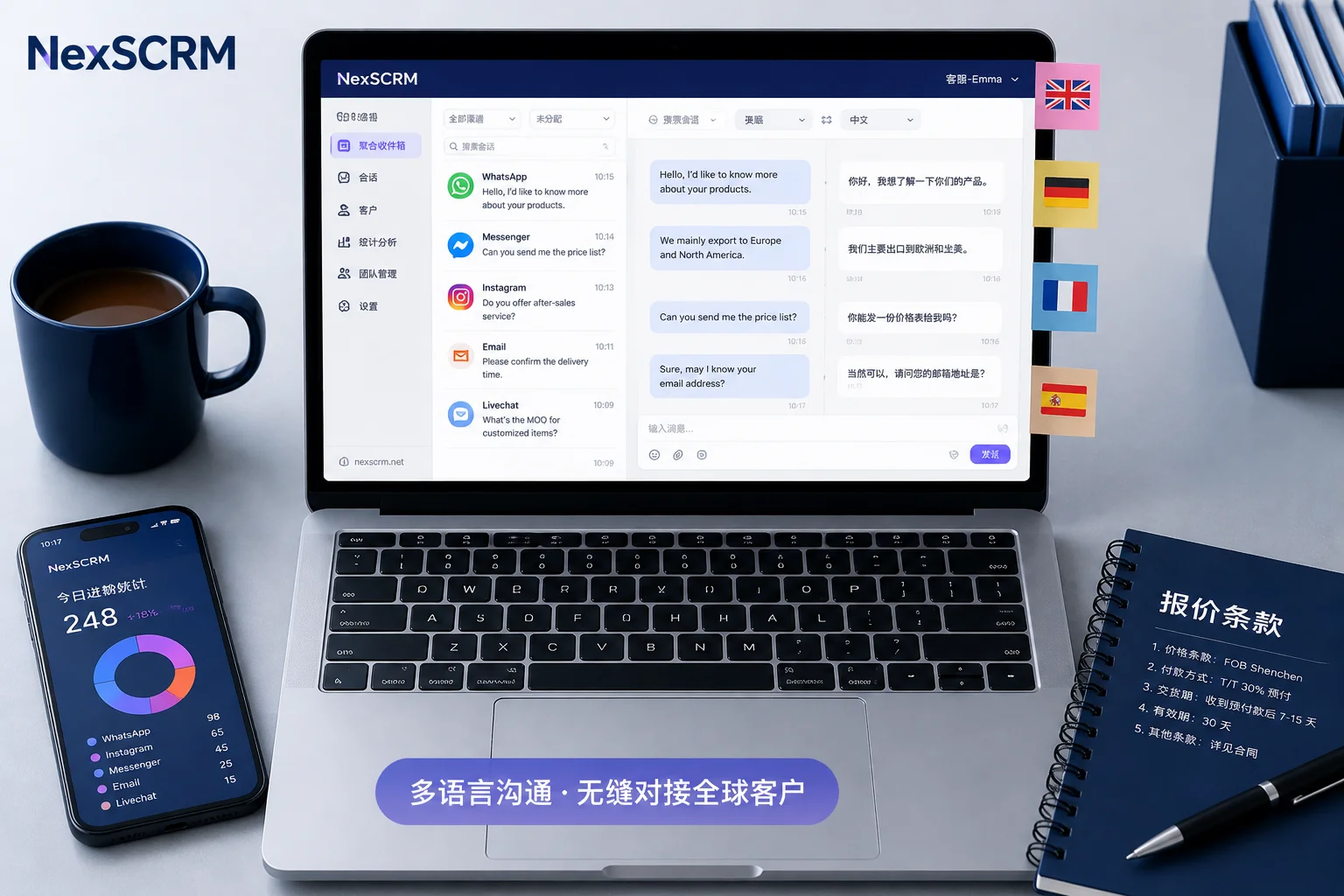
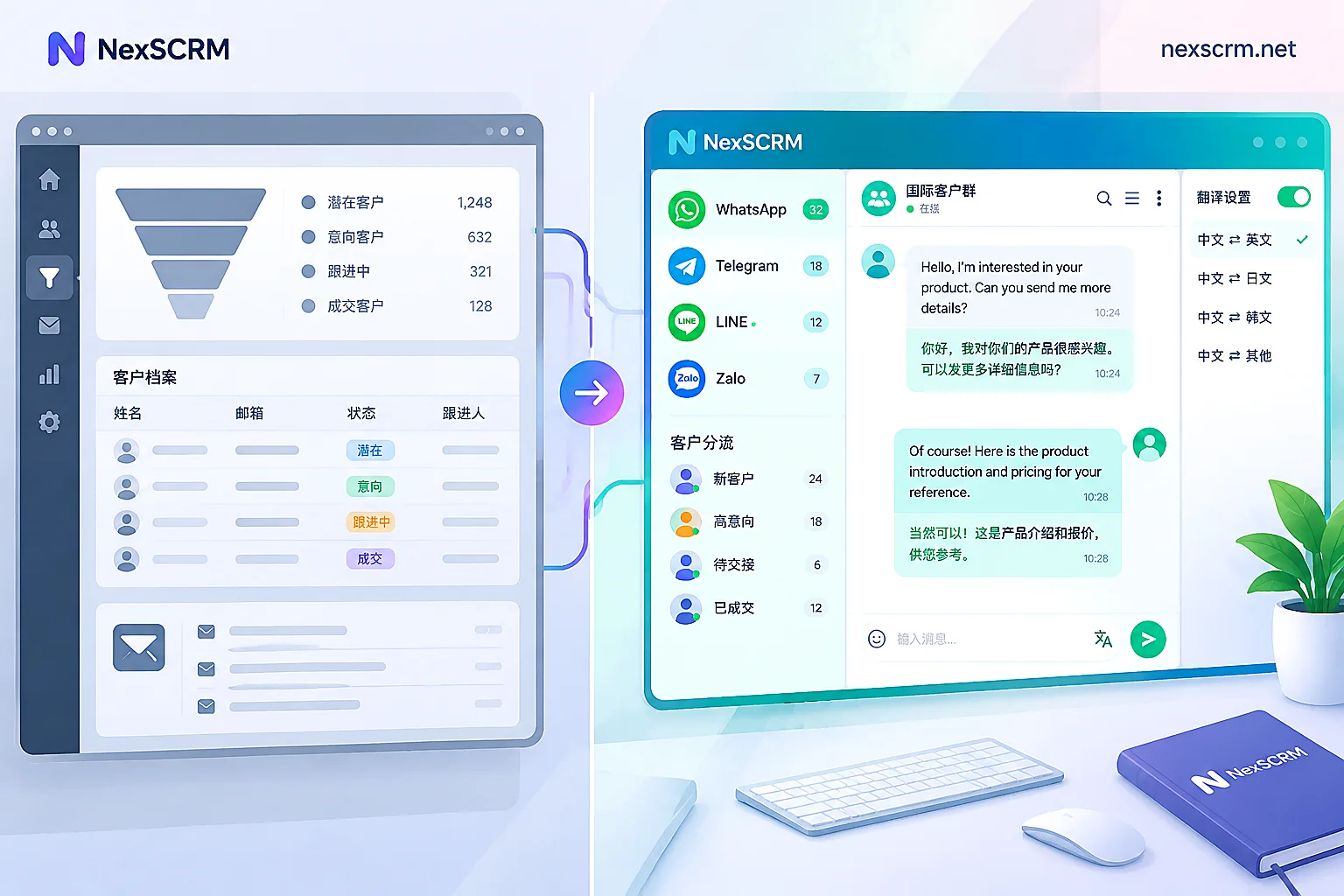
- Multi-platform, multi-account aggregation management: The system supports centralized access and unified agent assignment for mainstream overseas social media accounts like WhatsApp, Telegram, LINE, and Zalo, providing independent operating environments to ensure stable multi-account coordination.
- Real-time bidirectional translation and AI-assisted replies: Built-in multilingual real-time bidirectional translation helps customer service staff handle global inquiries effortlessly; combined with AI-assisted reply scenarios, it significantly reduces first response time.
- Message backup and marketing data statistics: Automatically deposits conversation records and message statistics, enabling standardized retention of private domain customer assets and multi-dimensional performance evaluation.
By combining compliant communication processes with the platform's aggregation management and real-time translation capabilities, enterprises can not only reduce the risk of account suspension due to violations but also effectively control customer service follow-up quality and customer conversion closure.
4. Brand Engagement: Assess Whether Your Team Needs to Upgrade the SCRM Architecture
You can self-assess using the following four dimensions:
- Multilingual response speed: Can your customer service team complete professional replies in the customer's native language within 60 seconds?
- Multi-account risk control: When multiple agents collaborate, do you have independent environments and session isolation mechanisms?
- Private domain asset retention: If a customer service rep leaves, is the entire customer communication history and follow-up status fully preserved in the system?
- Multi-channel aggregation efficiency: Can your team respond centrally to messages from WhatsApp, Telegram, LINE, and Zalo on a single screen?
If you answer "No" to 2 or more questions, it is recommended to promptly evaluate and introduce a modern SCRM system like NexSCRM that combines multilingual bidirectional translation with multi-platform aggregation capabilities.
5. Summary and Hands-On Implementation Checklist
Under the new normal of Meta's 2026 API policies, enterprises can only achieve long-term cross-border growth by adhering to the principles of "authorized marketing, quality service, and digital retention."
Compliance Operation Checklist for Overseas Enterprises:
- [ ] Review template message classifications to ensure proper use of Service and Marketing messages;
- [ ] Establish a user-authorized private domain traffic mechanism to prevent unauthorized bulk harassment;
- [ ] Configure an aggregate customer service system with multilingual real-time translation to boost conversion rates within the 24-hour service window;
- [ ] Implement message backup and full-process data statistics to ensure the safety and controllability of overseas customer assets.
By combining the latest platform rules with modern tool capabilities, overseas teams will gain a competitive edge in global social private domain competition.


Comments(0)