 NexScrm官方博客
In cross-border e-commerce, foreign trade B2B, and refined overseas private domain operations, social media platforms have become the core channel for customer communication. However, as consumer touchpoints become increasingly fragmented, businesses often need to operate multiple major overseas social apps simultaneously, such as WhatsApp, Telegram, LINE, and Zalo. Frequently switching between app backends, language barriers in cross-border communication, and difficulties in agent collaboration are causing a large number of potential orders to be lost in communication gaps.
According to industry evaluation reports, more than 70% of global consumers expect a seamless service experience when communicating across platforms. How to leverage a social media aggregated customer service system to create a unified inbox has become a key challenge that cross-border operation teams urgently need to overcome.
Industry Trends: Why Must "Multi-Channel" Move Towards "Aggregation"?
Many teams often confuse "multichannel" with "omnichannel aggregation" when building overseas customer service systems. Multichannel only means that a company has opened multiple consultation entrances, but each platform operates independently and data is siloed. For example, when a customer initiates a consultation on WhatsApp and then switches to Telegram or LINE, the agent cannot retrieve historical context, requiring the customer to repeat the issue, which significantly reduces customer service efficiency.
The latest general research and official Meta announcements in the industry show that major platforms are continuously advancing AI automation and multilingual assistance mechanisms (such as Meta Business Agent's application expansion on WhatsApp and Messenger). However, official platform tools often focus on a single channel and are difficult to meet the unified management needs across platforms and multiple accounts.
Common pains in traditional multi-channel management include:
- Message omissions and timeouts: Agents need to repeatedly log in to multiple platforms and dozens of accounts, making it easy to miss timely responses, leading to penalties or lost orders.
- Multilingual communication barriers: Facing consultations in minor languages such as Indonesian, Thai, Vietnamese, and Spanish, relying on external web translation is inefficient and prone to ambiguity.
- Account security and asset risks: Multiple agents logging into the same account can trigger remote login security controls, or departing employees may take away customer chat records and contact assets.
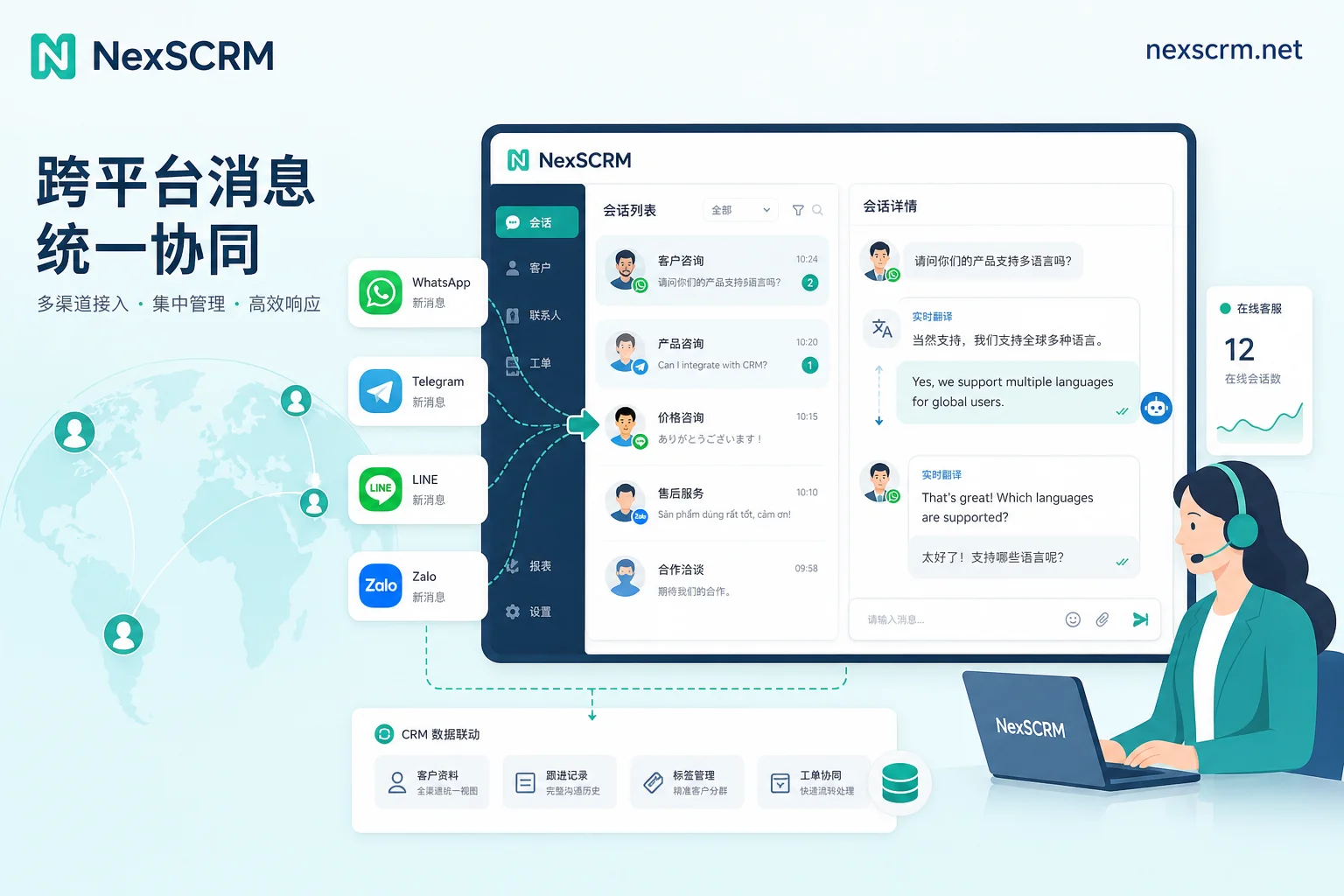
Four Core Evaluation Dimensions for Social Media Aggregated Customer Service Systems
Facing the diverse overseas social media customer service software on the market, enterprises should focus on the following four dimensions when selecting a solution:
1. Unified Inbox for Cross-Platform Multi-Account
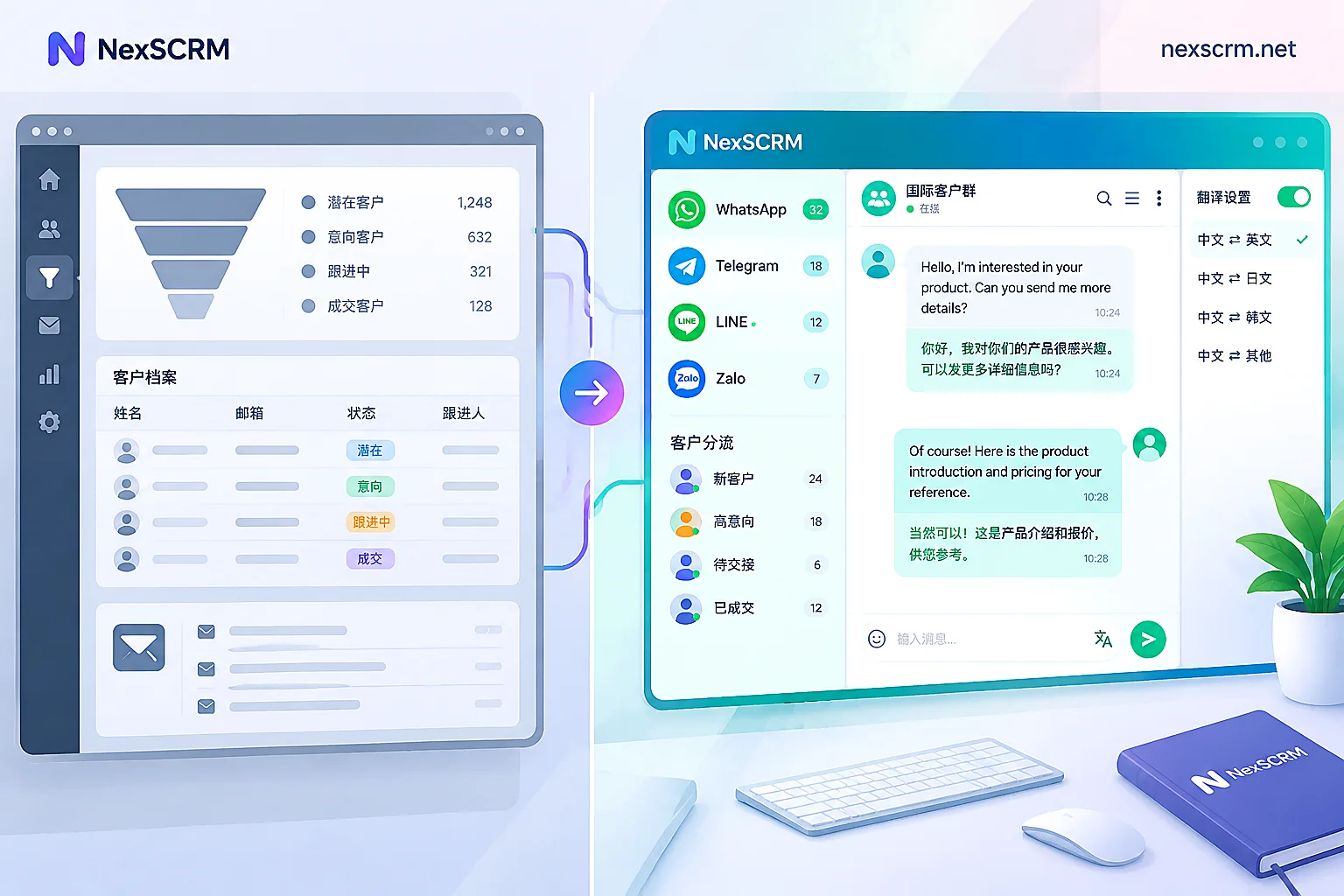
A true social media aggregated customer service system can bring conversations from different platforms like WhatsApp, Telegram, LINE, and Zalo into the same workbench. Agents can handle conversation assignment, tagging, and replies from a unified interface without switching between different software windows.
2. Real-Time Bidirectional Translation and AI Assistance
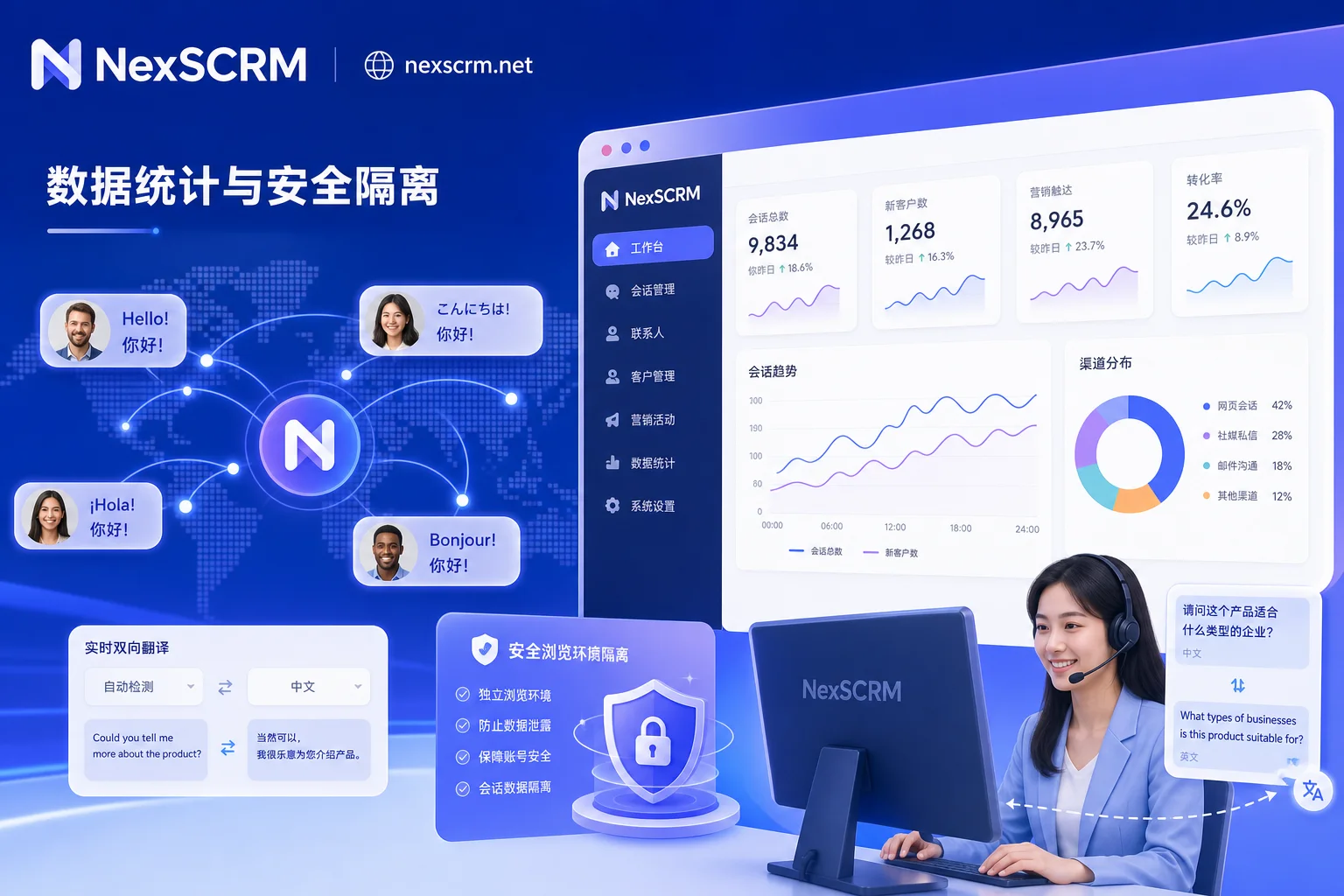
Real-time bidirectional multilingual translation is key to cross-border communication. The system should automatically detect languages and provide bidirectional conversion while sending and receiving messages, combined with AI-assisted reply scenarios to quickly generate drafts that match local expression habits, reducing reliance on foreign language agents and training costs.
3. Multi-Account Independent Environment and Risk Isolation
Overseas platforms have strict regulations on multi-account login and batch risk. An excellent aggregation tool must have independent environment isolation to avoid cross-account risk triggered by environmental contamination.
4. Customer Data Retention and Marketing Statistics
A customer service system should not remain at the "chat tool" level; it must have message backup and marketing data statistics. The system needs to clearly record channel entry statistics, response time, session duration, and agent performance, forming a data loop for review.
Implementation Practice: How NexSCRM Empowers Cross-Border Customer Service and Refined Private Domain Operations
Facing the complex challenges of dispersed multi-platform messages and multilingual operations, choosing an appropriate social media aggregated customer service architecture that fits cross-border business scenarios is crucial.
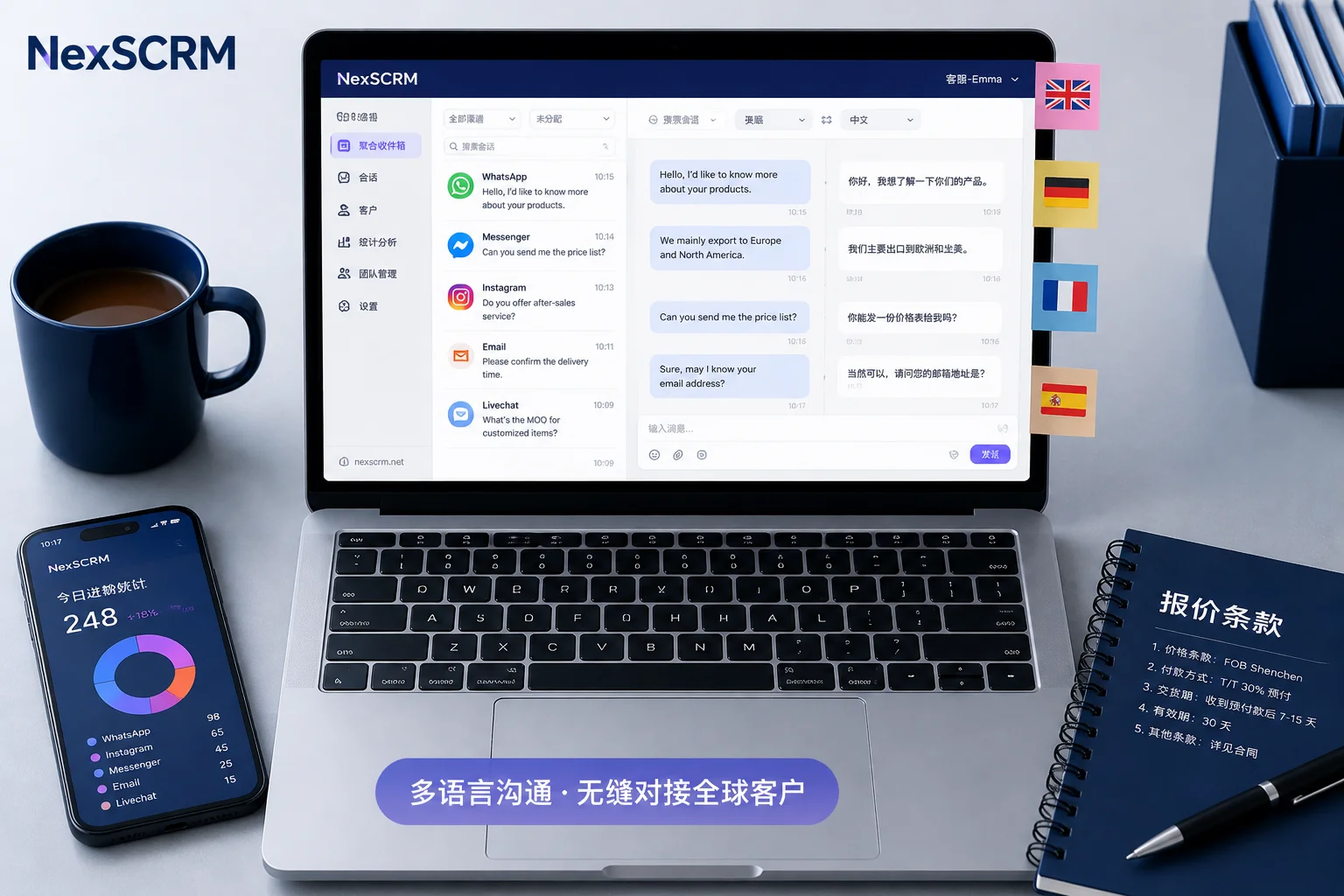
Through NexSCRM's real-time bidirectional translation and multi-platform multi-account aggregation management, customer service teams can manage multiple WhatsApp, Telegram, LINE, and Zalo accounts from a single backend. Customer messages received by agents can be automatically translated bidirectionally in real time, significantly improving response speed and service satisfaction for multilingual markets in Southeast Asia, Latin America, Europe, and beyond.
In terms of business security and process management, addressing the need for multi-agent collaboration in international teams, administrators can effectively isolate account environment risks and retain complete communication histories based on independent environment and message backup features. Combined with AI-assisted reply scenarios and message/marketing data statistics, enterprises can accurately track conversion ROI across social channels, transforming customer service teams from mere cost centers into private domain engines that drive business growth.
Practical Selection Recommendations for Social Media Customer Service Implementation
- Prioritize Business Touchpoints: Select mainstream channels based on target markets. For example, focus on integrating WhatsApp, LINE, and Zalo in Southeast Asia, while prioritizing smooth WhatsApp and Telegram access in Europe and America.
- Establish Multilingual Service SOPs: Introduce social media aggregation customer service tools with real-time bidirectional translation and AI-assisted reply features, and create standard response templates for frequently asked questions.
- Emphasize Compliance and Data Asset Protection: When selecting a social media aggregation customer service solution, leverage NexSCRM's independent environment and message backup capabilities to better address security compliance and asset protection challenges in cross-border operations.
By building an efficient, secure, and multilingual-capable social media aggregated customer service system, cross-border enterprises can not only shorten response times but also transcend language and channel boundaries, establishing a more resilient overseas private domain customer service system.


Comments(0)