 NexScrm官方博客
When overseas teams answer customer inquiries about product parameters or shipping status in community groups, they often face a dilemma: sending a long unformatted text can bury key information in the chat flow, while having bots reply directly in public groups with order details can bother other members. This awkward communication experience has recently undergone a fundamental change.
Telegram has officially launched a major version update featuring a Rich Text Editor, Communities, and Ephemeral Bot Messages. This update not only extends the character limit per message to 32,768 characters but also transforms group interaction from two dimensions: information layout and privacy isolation. For cross-border teams seeking efficient customer service and follow-up solutions, integrating these new features with their private domain operation tools has become a topic that needs reevaluation.
Say Goodbye to Formatting Chaos: The Transformation of Long Text and Structured Information
In the past, distributing complex business information on Telegram was often limited by minimalistic text formatting. If customer service wanted to send a clear comparison quote, return policy, or multi-step product guide, they usually had to send multiple short messages or directly post an image containing text. The former could disrupt reading continuity, while the latter made text uncopyable and rendered automatic translation tools ineffective.
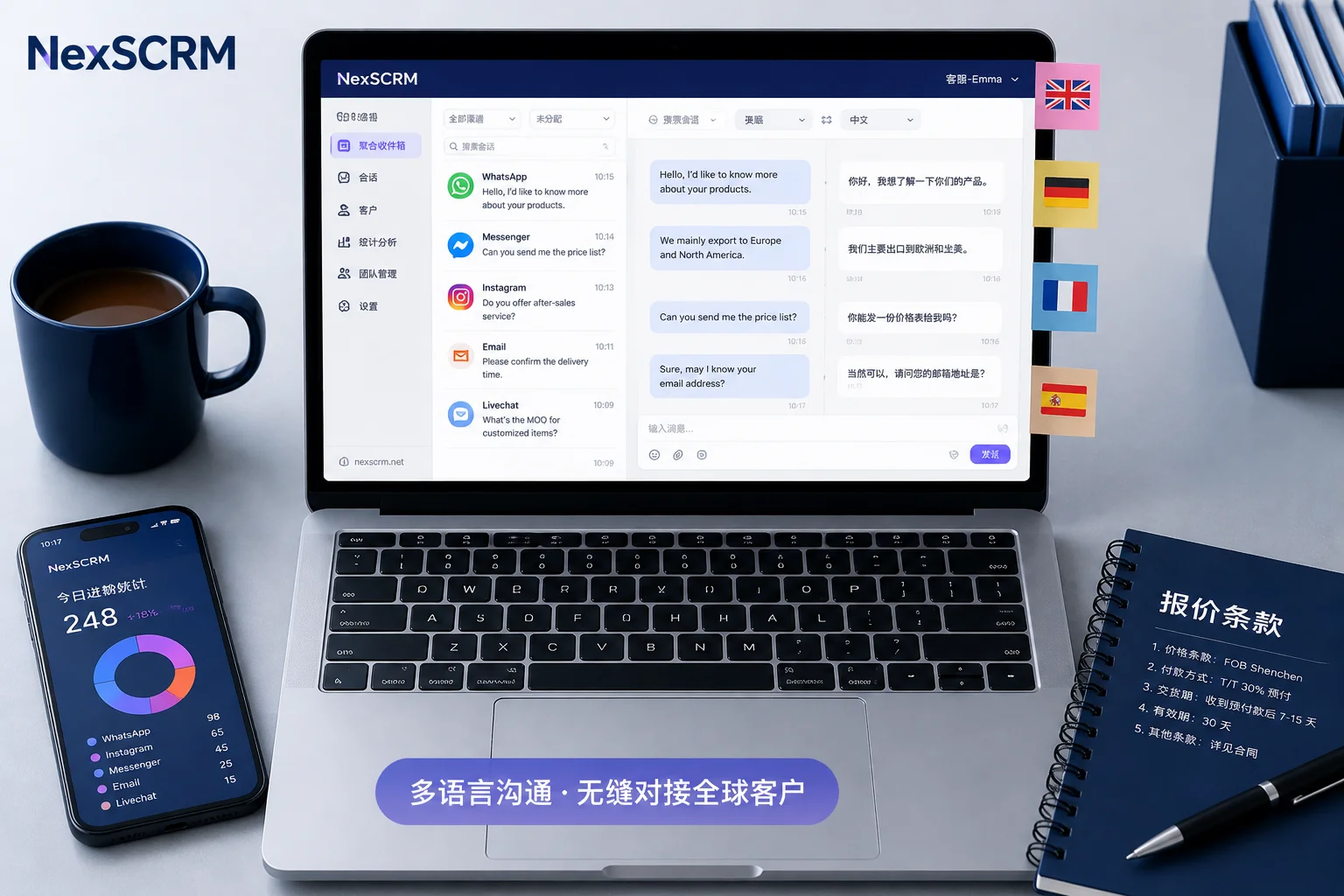
The new Rich Text Editor breaks this limitation, allowing direct addition of headings, tables, code blocks, and ordered lists within a single message. This means cross-border teams can organize fragmented customer service scripts into structured layouts. For teams dealing with multilingual communication, structured rich text formatting can significantly reduce misinterpretation rates when combined with systems like Nexscrm for multilingual translation and semantic analysis, ensuring accurate delivery of business information while maintaining aesthetics.
Coexistence of Rich Text and Private Interaction: New Opportunities for Private Domain Operation Tools
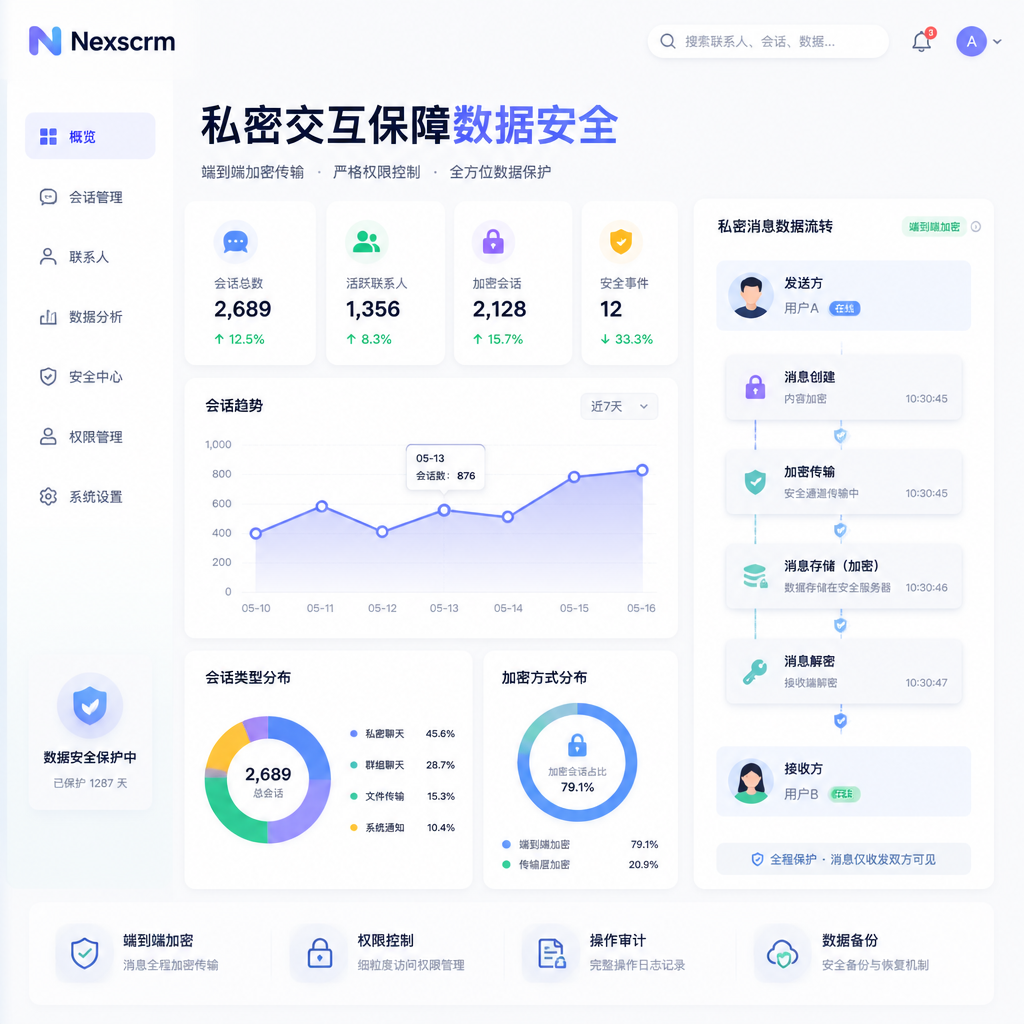
In large public customer groups, automated interaction has always had a conflict between privacy and efficiency. When a customer clicks a button in a group to query personal order status, account points, or coupons, traditional bot replies often appear directly in the public chat. This not only causes group spam and disturbs other users but may also expose sensitive transaction details.
The new Ephemeral Bot Messages mechanism solves this problem. When a user initiates a query in a group, the bot's response is visible only to that user and does not leave redundant information in the group history after reading. This "private conversation in a public space" model brings significant adjustments to the automation process of private domain operation tools:
- Avoid information overload in groups, keeping the public channel discussion focused
- Protect customers' personal identity and transaction data privacy in public groups
- Reduce user churn caused by excessive automated replies
- Increase conversion rates in private interactions, making overseas users more willing to initiate real-time queries in groups
From Dispersed Groups to Unified Communities: Structural Reorganization of Matrix Operations
Beyond layout and private interaction, Telegram has also introduced Communities at the architecture level, allowing operations teams to consolidate previously scattered Channels, Groups, and Bots under one unified community framework for centralized management.
In the old operation model, merchants often had to guide customers to jump between independent links: announcements in channels, discussions in main groups, after-sales in VIP groups. This fragmented structure easily led to user attrition. The new community architecture provides a clearer hierarchical management method:
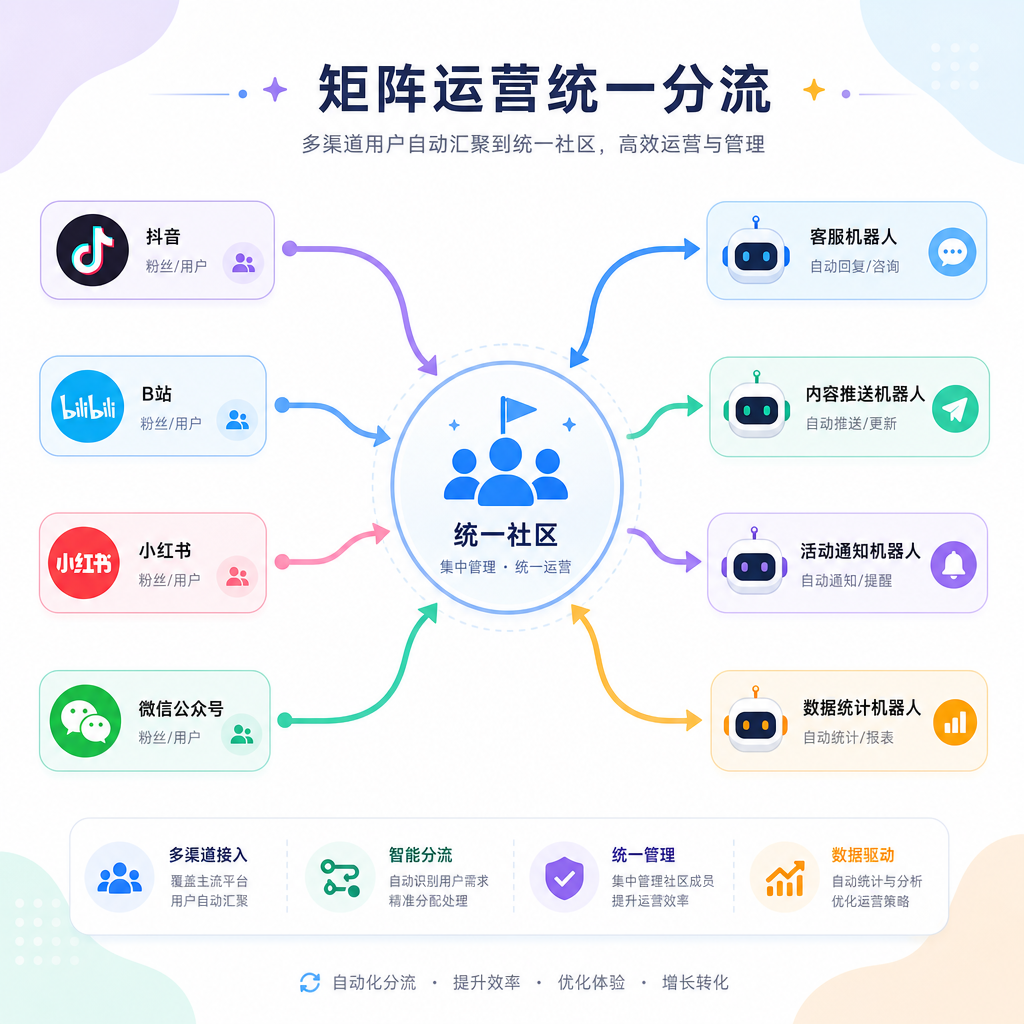
- Unified portal: Consolidate product release channels, after-sales discussion groups, and customer service entrances under the same hierarchy
- Tiered permission access: Dynamically open access to different subgroups based on customer consumption levels or identity tags
- Automated routing: Precisely route and follow up with new users via backend interfaces
- Reduce asset loss: Prevent user asset disconnection caused by a single group link failure or abnormality
Building Efficient Private Domain Response: Recommendations for Adapting to New Interaction Models
To convert these new platform features into actual conversion power, operations teams need to reexamine existing communication SOPs and backend support systems.
Teams can start by revamping the script library, upgrading original plain text customer service templates to rich text standards with headings and lists, making it easy for customer service to quickly reference during communication. In automated interactions, involving personal data queries, exclusive coupon redemption, etc., should fully adopt the single-user visible ephemeral message mechanism to provide a highly private experience that meets overseas users' expectations.
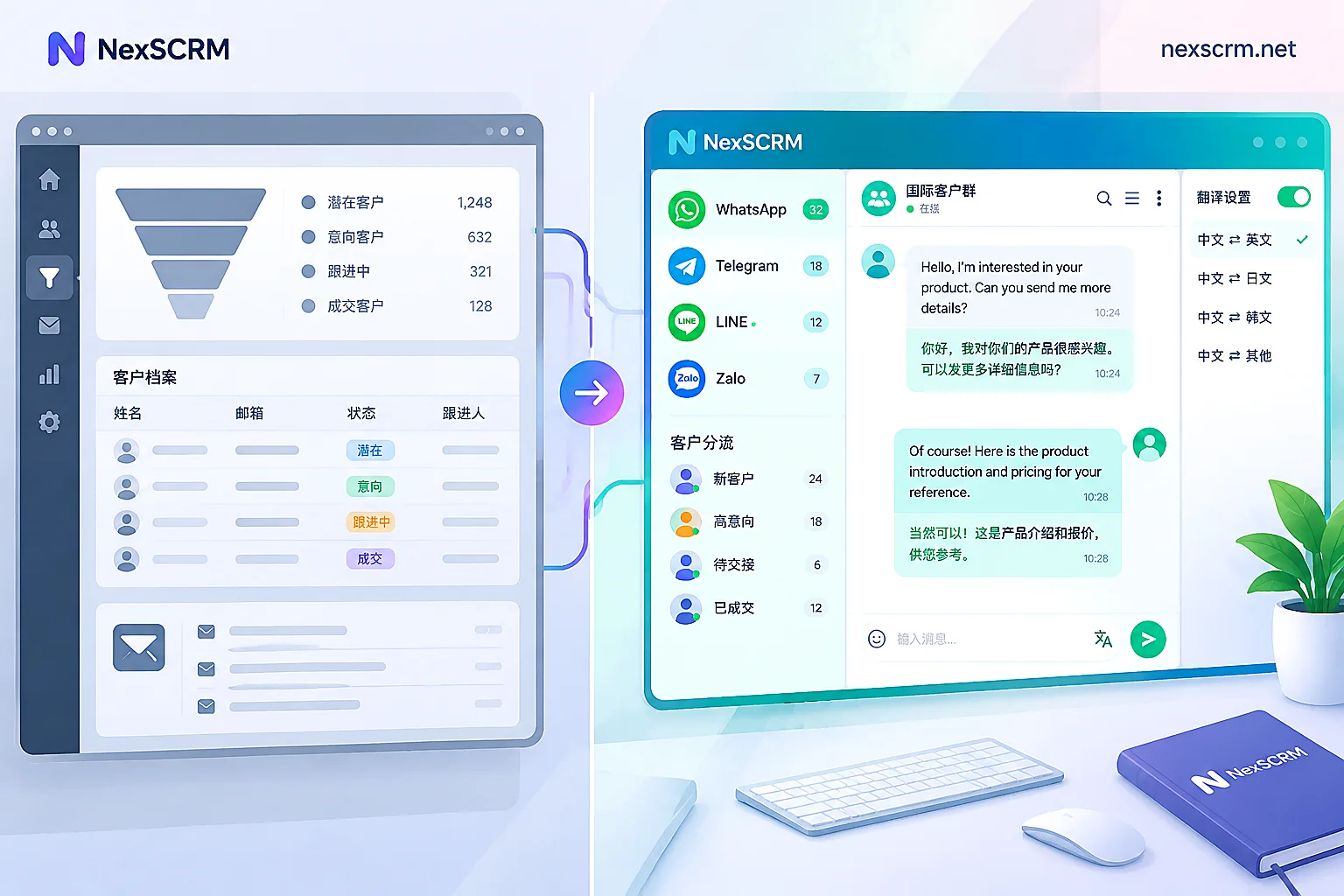
On the multi-channel response side, using Nexscrm to uniformly receive and process messages from different community subgroups helps customer service agents perform multilingual translation, context tracing, and tag marking in a single panel. This combination of front-end experience upgrade and deep backend tool integration allows teams to maintain agile and efficient response speeds when facing new community architectures.


Comments(0)