 NexScrm官方博客
A confirmation message sent to a Kazakhstan customer almost ruined a nearly $10,000 purchase order because a client-side plugin mistranslated "partial shipment" as "order permanently canceled." As the overseas consumption season kicks off in mid-July, many export-oriented teams' customer service departments are under heavy pressure from cross-language communication, facing a wave of Russian, Spanish, and Arabic inquiries.
Traditional copy-paste translation is not only extremely time-consuming but also prone to context loss during shift changes. To thoroughly solve this problem, relying solely on generic translation tools is far from enough; modern Telegram translation software combined with standardized processes is essential to break through the bottlenecks of cross-border communication.
Language Barriers and Collaboration Disconnects: Real Pain Points in Cross-Border Customer Service
The above incident was not an accident. Reviewing the team's past communication records, we identified three long-hidden yet highly damaging bottlenecks:
First, poor context recognition. The web-based mini-tools the team previously used worked for general conversations but easily caused semantic distortions when dealing with colloquial abbreviations or industry-specific terms in Russian or Thai. Customer service often sent incorrect quotes or delivery dates unknowingly.
Second, chaotic cockpit collaboration. Telegram's official client does not have a built-in enterprise-grade multi-cockpit assignment mechanism. When three agents logged into the same bot or main account backend simultaneously, conversations had no clear attribution. A morning shift agent chatting with a potential client in English would be followed by an evening shift agent who, unable to read the historical Russian records, asked the same questions again, severely damaging the customer experience.
Third, slow processing of multimedia information. Customers in Eastern Europe and the Middle East often send images with handwritten annotations or Russian tables. Agents had to download the image, manually type out the text, then translate—a single reply could take over ten minutes, leading to high-intent customer churn.
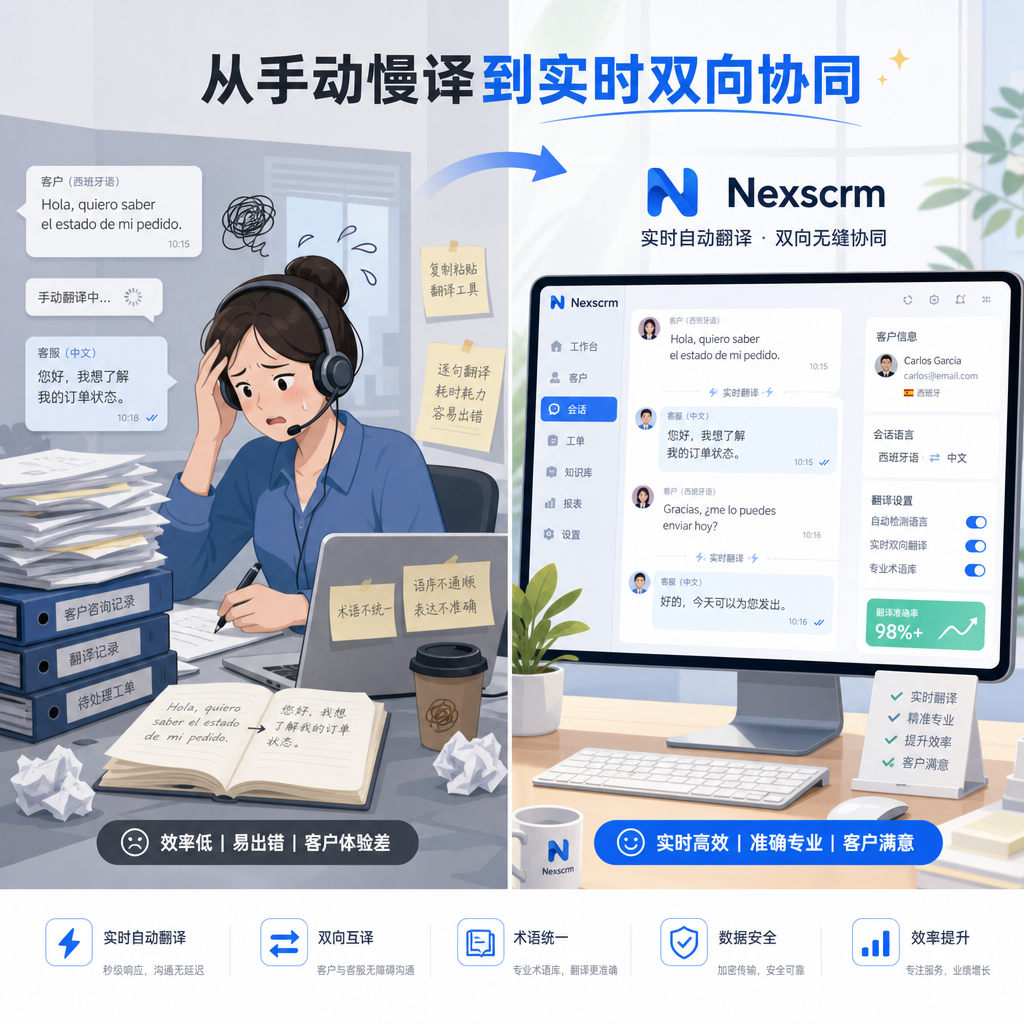
From Frequent Mistranslation to Real-Time Bidirectional Collaboration: The Logic of Introducing Telegram Translation Software
When selecting and configuring Telegram translation software for the team, we focused on comprehensive upgrades in translation accuracy and interface response speed. The technical setup and business workflow implementation included the following key actions:
- Deploy a bidirectional streaming translation engine: set up automatic language detection and real-time comparison. When an agent types in Chinese, the system instantly converts it into a translation that matches local language habits and sends it to the customer, while retaining a bilingual comparison on the panel for detail verification.
- Build a vertical industry-specific glossary: manually tag and calibrate professional terms for electronic components, garment specifications, etc., to avoid awkward machine translation errors.
- Integrate image OCR dynamic extraction: when agents receive screenshots of contracts or specifications containing non-English characters, they can extract text from the image with one click via the panel and complete real-time translation without manual typing.
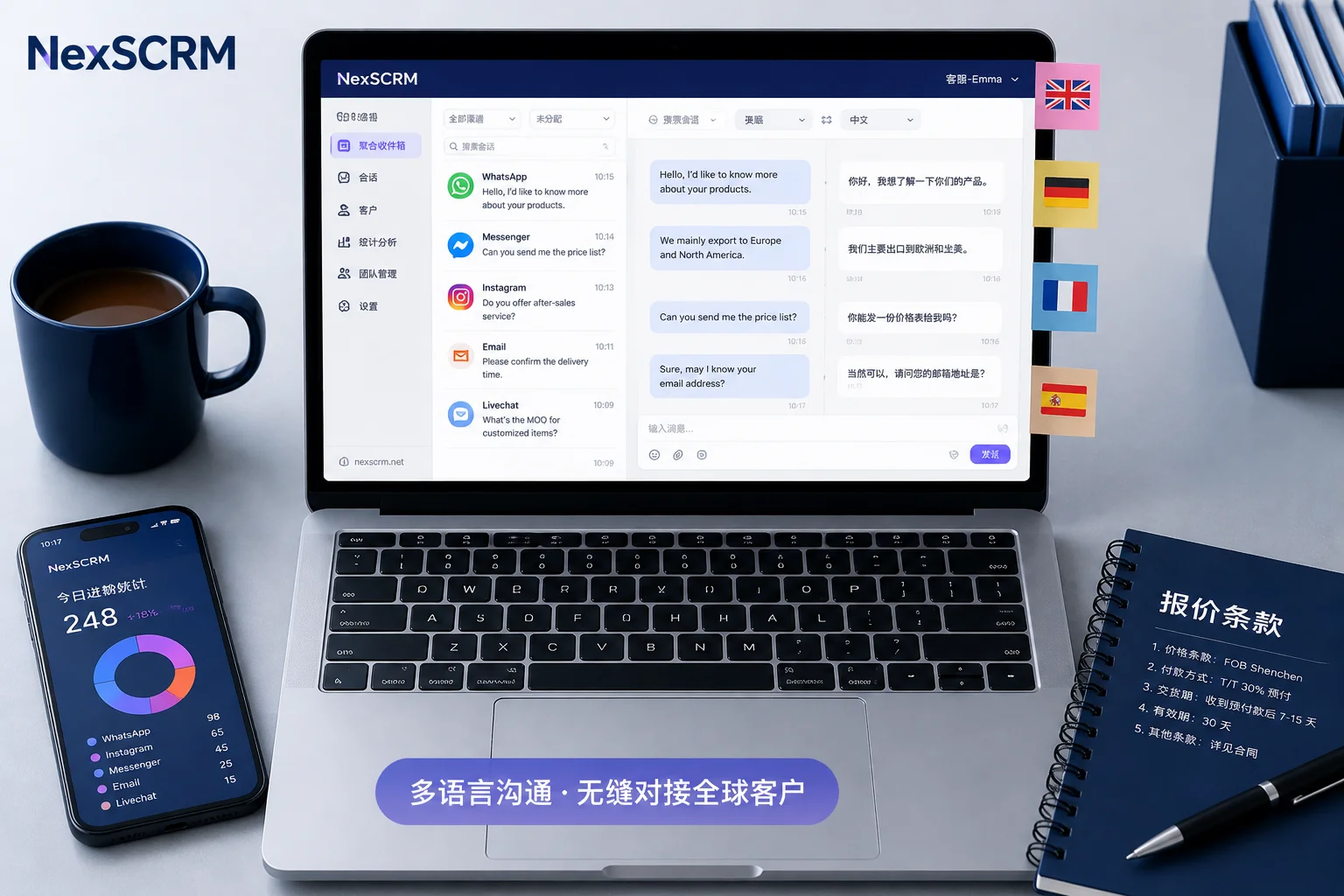
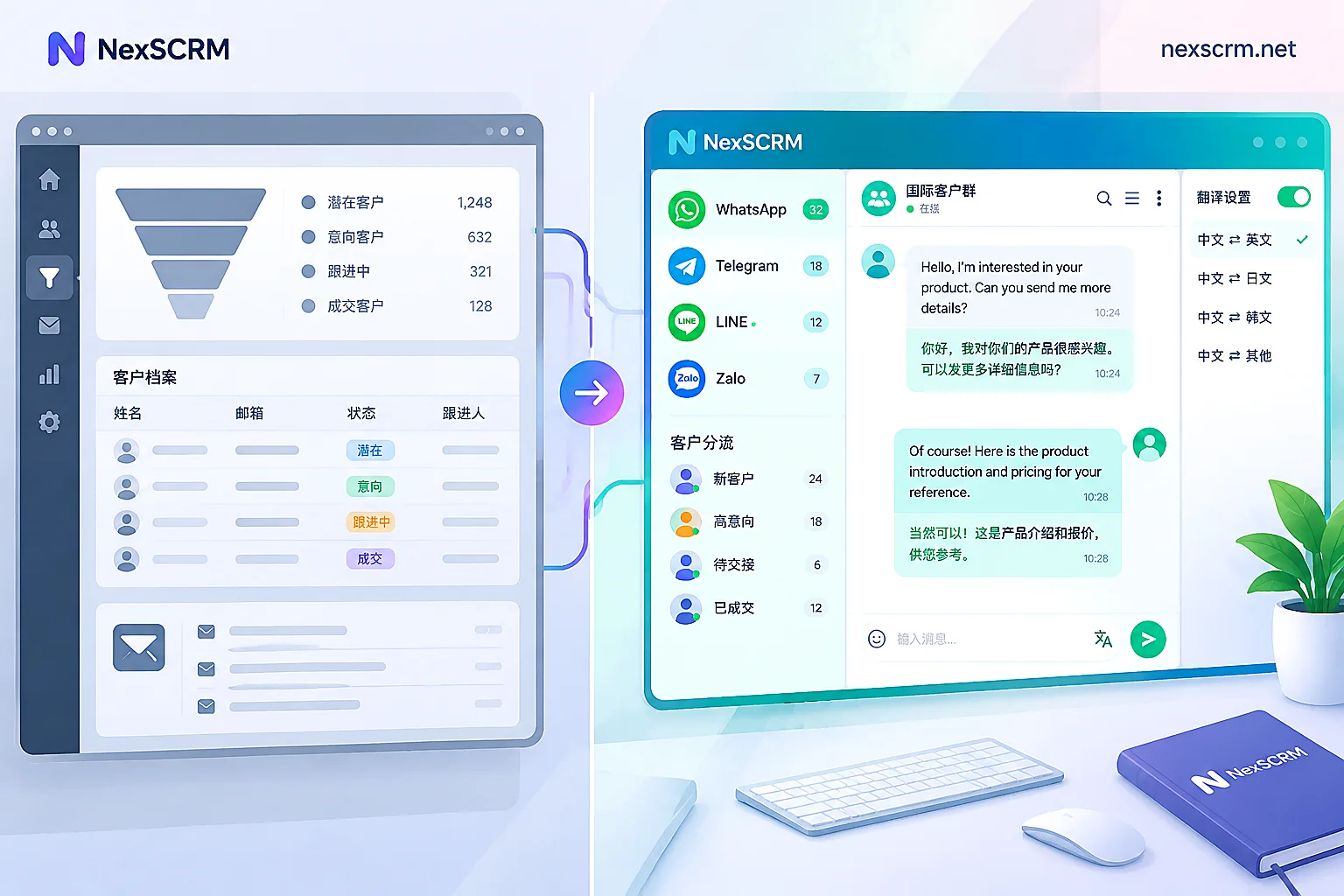
- Implement centralized cockpit management: embed Nexscrm customer management system into a unified workbench, aggregating messages from multiple Telegram accounts on one interface, and automatically assigning them to the appropriate agent by language and customer priority.
Through this combination of measures, cross-border conversations that were previously scattered across multiple phones and browser tabs were restructured into a standardized pipeline.
Conversation Attribution and Automated Follow-Up: Specific Steps to Connect Private Domain Channels
After solving the problems of "understanding" and "responding quickly," the next step was to establish a smooth session handover and customer asset retention mechanism.
The team set strict handover rules. When a shift change occurs, the incoming agent simply checks the sidebar on the console, where the system has automatically converted all previous foreign language conversations into coherent Chinese. Combined with dynamic tags left by the previous agent, such as "prefers Spanish" or "sample quote provided," the incoming agent can grasp the full context within three seconds and continue the conversation seamlessly.
To address time zone differences with Latin American and Middle Eastern customers, the team configured intelligent response rules based on language preference. During off-hours, the system automatically triggers a welcome message in the visitor's language and provides answers to frequently asked questions.
More importantly, customer contact information, purchase intent, and historical quotes extracted during chats are automatically synced to the enterprise database via Nexscrm. Even if staff changes occur later, core customer resources and communication history are not lost.
Real Benefits and Experience Tips After Workflow Restructuring
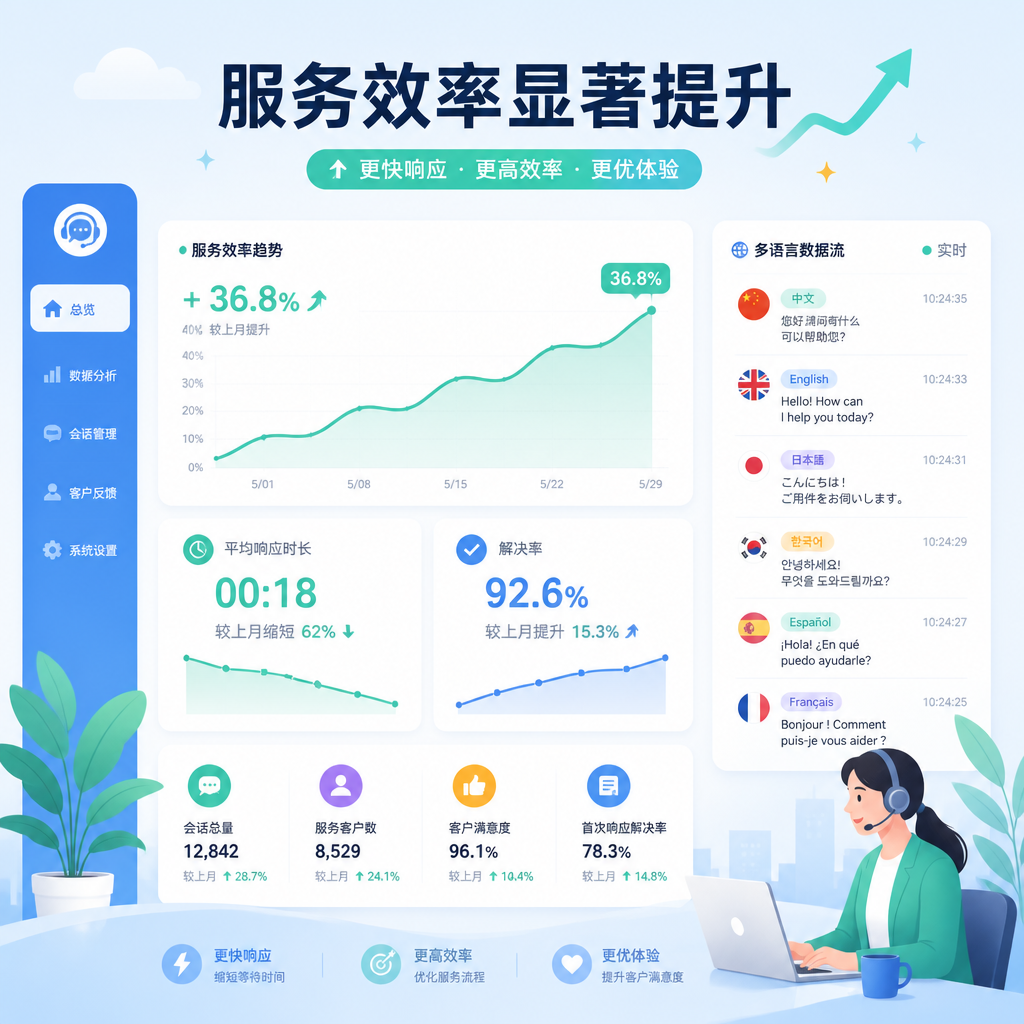
Within two weeks of completing this workflow restructuring, the customer service team's operational data saw significant improvements: average first response time dropped from 4 minutes 30 seconds to under 40 seconds, and multilingual conversation handling capacity nearly tripled. The most noticeable change was that chargebacks and customer complaints due to language misunderstandings dropped to zero.
From crisis to smooth operations, the Telegram translation software played a key bridging role. For most companies going global, cross-border customer service is not just simple text Q&A but the first line of building overseas trust. Only by deeply integrating efficient translation tools with structured private domain management can a company stand firm in the competitive overseas market.


Comments(0)