 NexScrm官方博客
When choosing a social media follower counter, the first thing to do is not to compare the number of features, but to verify whether its data collection logic can be validated and audited. Many teams switch between several tools and still can't reconcile the numbers; the problem often lies in the "statistical logic" rather than "accuracy." According to a guide published by ChatKnow in September 2024, real-time monitoring of new followers across multiple WhatsApp or social media accounts, automatic backfill after disconnections, and duplicate follower recognition have become key methods for measuring the quality of traffic channels and agent performance. The following five criteria are your checklist when evaluating any counter.
How to Choose a Social Media Follower Counter: Distinguish Between "Displayed Numbers" and "Numbers That Can Be Used for Performance"
The total number of new followers shown on the tool's screen and the number you can use to calculate commissions for customer service agents are often not the same. Displayed numbers may include duplicates, backfilled entries, or even followers from different channels, while performance evaluation needs to know "how many valid new customers were actually added today." So, before selecting a tool, confirm these five criteria: trigger points, offline backfill, cross-account deduplication, channel source tagging, and export/retention granularity. For each item, ask: Can this number be traced back and audited? If yes, it is eligible for performance evaluation.
Criterion 1: Trigger Points - Friend Add, First Message, or First Reply, Are They Counted as the Same?
Different counters may define "new follower" completely differently. Some count when a customer sends a friend request, some when the customer sends the first message, and others only after the agent's first reply. This can lead to huge discrepancies in the "new followers today" reported by different tools during the same period.
Define the definition internally first, then choose the tool. It is recommended to define "new follower" as "the action of a customer proactively initiating a friend request or conversation," because this indicates real intent. The trigger point also affects the downstream funnel: if you evaluate channels based on conversion to purchase, then the conversion rate from "friend add" to "first message" depends on a consistent definition of the trigger point.
Acceptance Question: Does the tool support custom trigger points? Can it export independent counts for each trigger point?
Criterion 2: Offline and Disconnection Backfill - How Long Is Considered a Miss, and How to Set the Backfill Window?
Common causes of missed records during disconnection include conversation interruptions, device offline, and synchronization delays. A good social media follower counter will provide automatic backfill, but you need to confirm three things:
- Is there a time window for backfill (e.g., data within 24 hours after disconnection)?
- Is the backfilled data marked with its source (to avoid confusion with normal data)?
- Will backfill cause double counting (counted twice in the daily total)?
Pre-launch Testing Method: Simulate a 30-minute network outage and observe whether the counter backfills the data during that period after recovery, and whether it is marked in the details. If not marked, you cannot distinguish between "real-time" and "backfilled" during evaluation.
Criterion 3: Cross-Account Deduplication - How to Identify if the Same Customer Added Two Accounts or Re-added with a Different Number
The same customer might add your two accounts through different entry points, or add again with a different number. If not deduplicated, agents can use duplicate customers to inflate numbers. Deduplication dimensions include phone number, conversation identity, and account ownership.
Deduplication rules must be agreed upon in the evaluation criteria in advance, for example, "the same phone number counts as one valid new follower within 30 days." This prevents gaming and makes the data closer to the real customer pool.
Acceptance Question: Does the tool provide cross-account deduplication? Can the deduplication rules be customized? Does deduplication affect historical data?
Criterion 4: Channel Source Tagging - How to Distinguish Followers from Ads, Independent Sites, or Offline Lists
Without source data, you cannot evaluate which channel really brings conversions. A December 2025 guide from Shopify emphasized that social private domain operations should shift from simple likes and follows to end-to-end conversion rate and ROI quantification, using short-link attribution, traffic entry tracking, and multi-language customer service communication funnel data.
Three practical methods for source tagging include:
- Separate numbers by entry: Each channel gets a dedicated number, and reports are grouped by number.
- Link parameters: Add parameters like utm_source to ads or content links.
- Landing page shunting: Different channels correspond to different landing pages, and tracking is done through page events.
A counter with source tagging can answer the question, "What is the cost per follower for this channel?"
Criterion 5: Export and Retention - Can You Pull Detailed Data by Person, Day, and Channel?
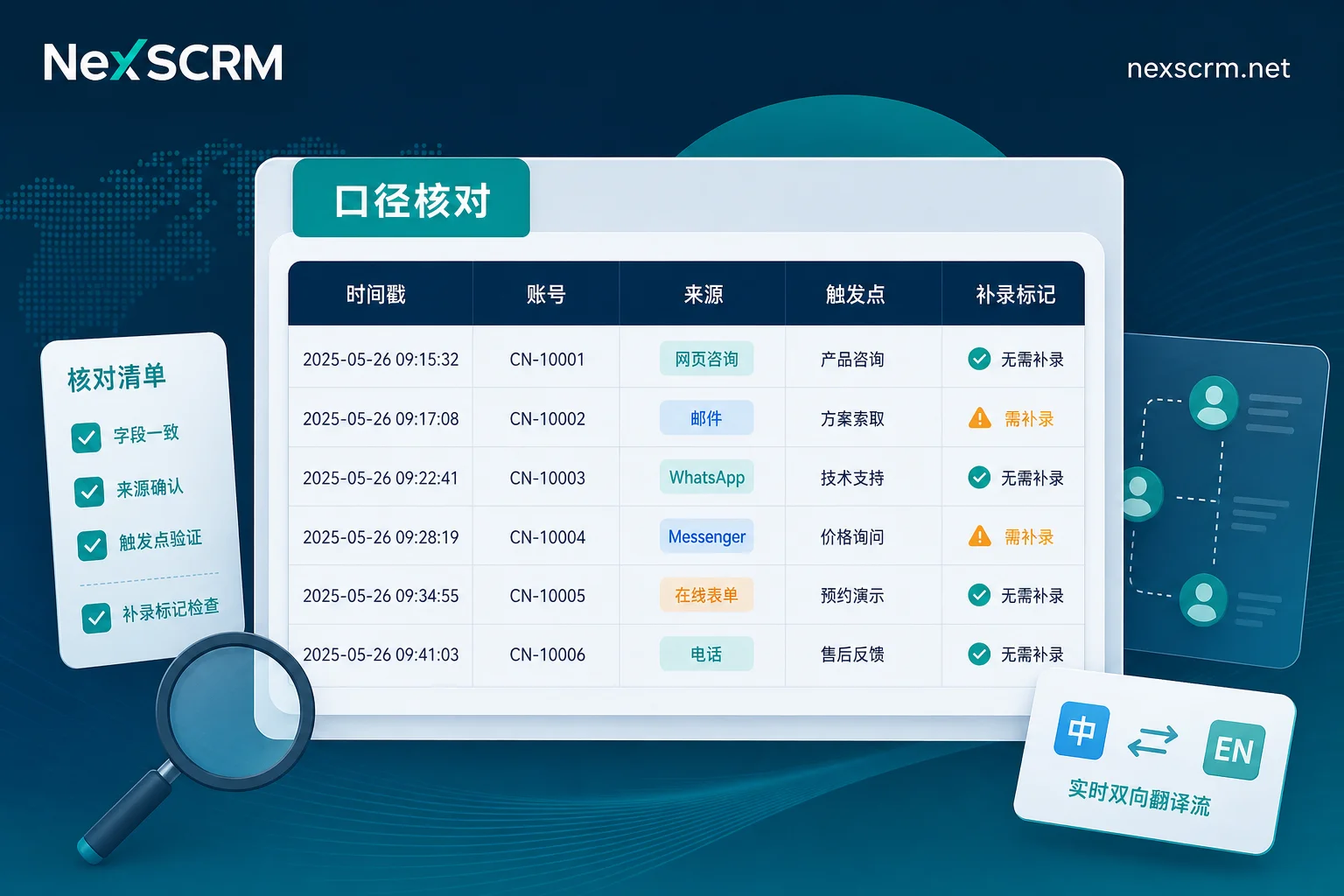
Aggregate numbers alone cannot support performance audits. When there are disputes between agents and channels about data, detailed export is the arbitration basis. When accepting the tool, request the following fields:
| Field | Description | Required |
|---|---|---|
| Timestamp | Exact time of the follower addition | Yes |
| Account | Specific account to which the follower was added | Yes |
| Customer ID | Masked phone number or ID | Yes |
| Source Channel | Ads, independent site, or other | Yes |
| Trigger Point | Friend add/first message/first reply | Yes |
| Backfill Mark | Whether it was backfilled after disconnection | Yes |
| Dedup Status | Whether identified as duplicate | Recommended |
It is recommended to retain data for at least 90 days to cover a complete evaluation cycle.
Connecting the Count Results to Performance Tables: Which Metrics Can Be Automatically Calculated, and Which Need Manual Sampling?
Automatically calculated metrics include: number of new followers, net increase after deduplication, channel distribution, and first response time. Metrics that need manual sampling include: follower quality (whether they are target customers), script compliance, and percentage of invalid numbers. During evaluation, set a sampling ratio for review (e.g., 10% daily) to prevent overemphasis on quantity.
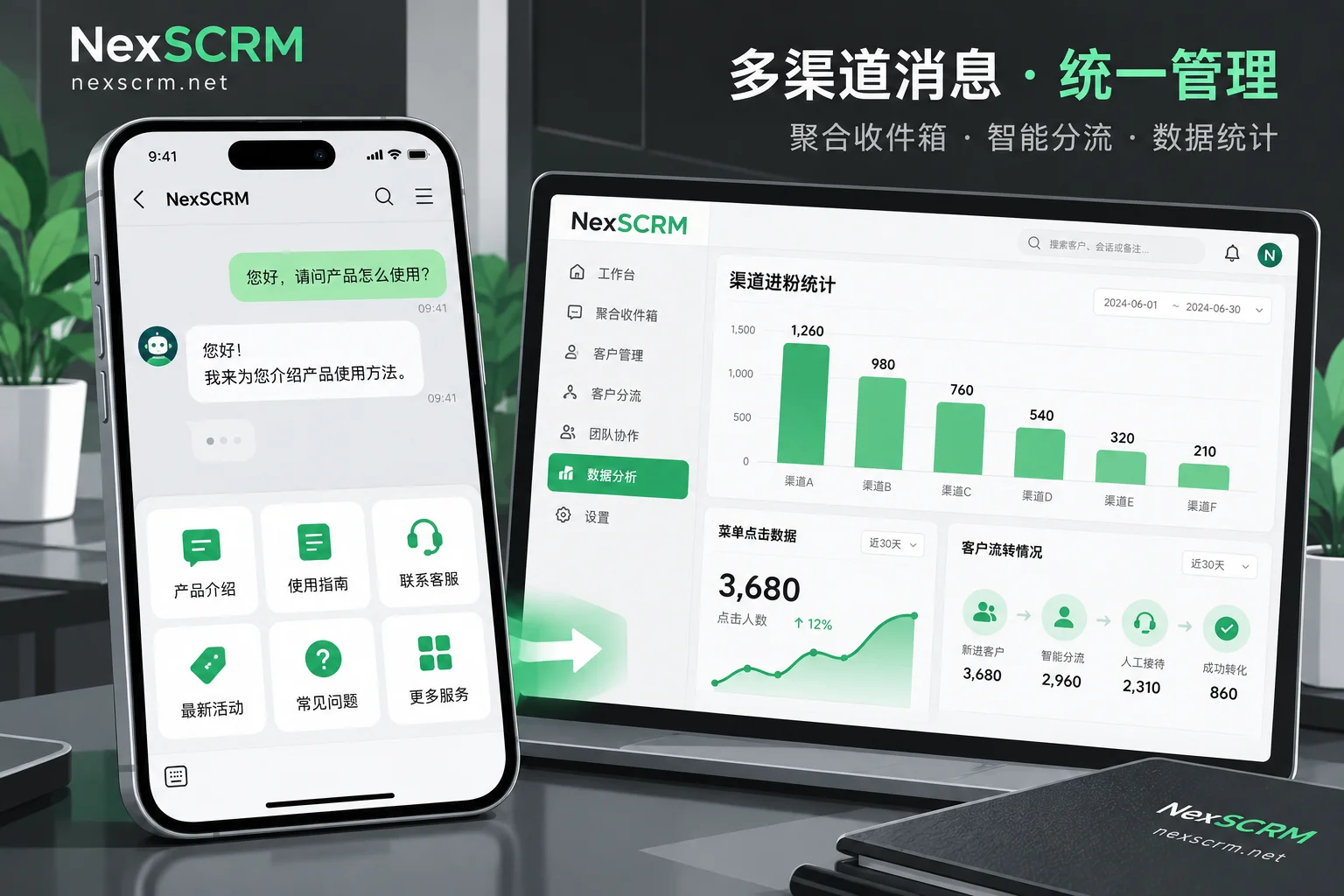
When implementing the solution, tools like NexSCRM, which support multi-platform aggregation for WhatsApp, Telegram, LINE, and Zalo, can consolidate follower additions and conversation data from various accounts into one backend. Combined with message and marketing data statistics for channel and agent dimension audits, and message backup to ensure that numbers can be traced back in case of disputes, these tools are suitable for teams that need a unified standard.
Configuration Comparison for Three Team Sizes and Pre-Launch Reconciliation Method
Teams of different sizes should focus on different configuration aspects:
| Team Size | Configuration Focus | Description |
|---|---|---|
| Individual | Basic counting + offline backfill | Focus on accurate follower numbers for their own account |
| Small team (3–10 agents) | Deduplication + channel tagging | Prevent duplicate counting, evaluate channel quality |
| Multi-region team | All items + detailed export | Need cross-account, cross-region review and audit |
Pre-launch, do a 7-day dual-track reconciliation: simultaneously manually log and use the tool, compare differences daily, and analyze discrepancies by cause (different trigger points, missed records, or duplicates). Lock in the criteria before going live for evaluation.
Common Questions
Why does the counter data not match the platform backend?
First, check whether the trigger point definition is consistent, for example, the platform backend counts "friends" while the counter counts "first messages." Then confirm whether there is backfill or deduplication logic. If it still doesn't match, export details and check line by line to find the time points of differences.
Are free social media follower tools sufficient?
Free tools generally only provide basic counting, lacking offline backfill, cross-account deduplication, and detailed export, so data credibility is insufficient. If you only need personal reference, they might suffice; for team evaluation, it is recommended to choose a solution that at least supports backfill and detailed export.
How to recover follower data missed due to disconnection?
Choose a tool that supports automatic backfill and enable it in the settings. Pay attention to the backfill window and marking to ensure it doesn't double-count. If the tool doesn't support it, you'll have to manually correct against the platform backend daily.
Will the same customer added to two accounts be counted twice?
That depends on whether the tool supports cross-account deduplication. If it does, it can identify and merge based on phone number or conversation identity. Confirm the deduplication rules and test to avoid double counting. If not supported, you may need to manually remove duplicates in reports.
How to evaluate agents' daily follower additions without gaming?
Evaluation metrics should include net increase after deduplication and source channels, and set a sampling ratio for review. You can also incorporate message quality sampling, combined with message backup and label management, as mentioned in the article What Are the Key Performance Indicators for WhatsApp Customer Service in Foreign Trade Teams?. Additionally, emphasize the authenticity of leads, as referenced in Methods for Labeling and Classifying Foreign Trade Customer Tags to assist manual evaluation.



Comments(0)