 NexScrm官方博客
In cross-border e-commerce and overseas private domain operations, LINE is a core social media tool connecting users in Japan, Taiwan, Thailand, Vietnam, and other regions. However, language barriers often cause communication delays, semantic misunderstandings, and even customer churn. For cross-border teams, choosing an efficient, accurate, and compliant LINE translation software is key to improving customer experience and sales conversion.
For foreign trade sales and overseas customer service teams, relying solely on third-party web "copy-paste" or simple one-way translation plugins often fails to handle high-concurrency multilingual conversations. This article will analyze the current technological changes in multilingual customer service and provide actionable software selection and operational recommendations.
1. Cross-Border Customer Service Pain Points: Why Traditional Translation Methods Can't Support Private Domain Growth?
In actual operations targeting East and Southeast Asian markets, cross-border customer service teams typically face three core challenges:
- Poor Response Efficiency: Customer service agents frequently switch between the LINE app, Google Translate, and documents, causing reply times to stretch to several minutes per message, easily leading to customer impatience and order abandonment.
- Low Accuracy for Minority Languages: Minority languages like Thai, Vietnamese, and Indonesian contain many localized expressions and e-commerce jargon. Traditional machine translation can easily produce ambiguities, even triggering customer complaints.
- Chaotic Multi-Account Collaboration: When teams manage dozens of LINE accounts, traditional environments can lead to login conflicts or data dispersion, making it impossible to uniformly track cross-language communication quality and marketing data across agents.
With the maturity of industry large models and multilingual customer service software, cross-border teams are accelerating their transition from "manual hard work" to "automated AI translation and centralized SCRM management."
2. Solution Comparison: Pros and Cons of Common LINE Translation Tools
Currently, mainstream LINE translation solutions on the market fall into three categories:
| Solution Type | Applicable Scenarios | Advantages | Limitations and Risks |
|---|---|---|---|
| Native Translation Bot / Group Bot | Personal daily communication, small temporary discussion groups | Simple deployment, directly add as friend or invite to group on LINE | Only supports one-way or fixed-rule translation; easy to disturb users in multi-member groups; lacks customer service queuing and data statistics functions |
| Browser Translation Plugin | Independent agents handling web version LINE temporarily | Low cost, quick installation | Only translates on-screen text; requires manual translation conversion before sending; multi-account environments can pose risks, lacking unified backup |
| Professional Aggregated SCRM Two-Way Translation System | Cross-border enterprises, foreign trade teams, multilingual customer service centers | Real-time two-way automatic translation, multi-platform multi-account aggregation, message backup, and AI-assisted replies | Requires systematic configuration and permission management, but significantly improves operational efficiency and customer satisfaction |
For enterprises focused on operational efficiency and data security, professional SCRM systems integrating real-time translation and multi-account isolation management have become the mainstream choice.
3. Practical Implementation: Building an Efficient LINE Multilingual Workflow Based on NexSCRM
To turn multilingual translation into real business growth, enterprises need to connect the full chain of "real-time communication - customer service collaboration - marketing analysis." With NexSCRM, operations teams can quickly implement the following solutions:
1. Real-Time Two-Way Translation and Zero-Delay Communication
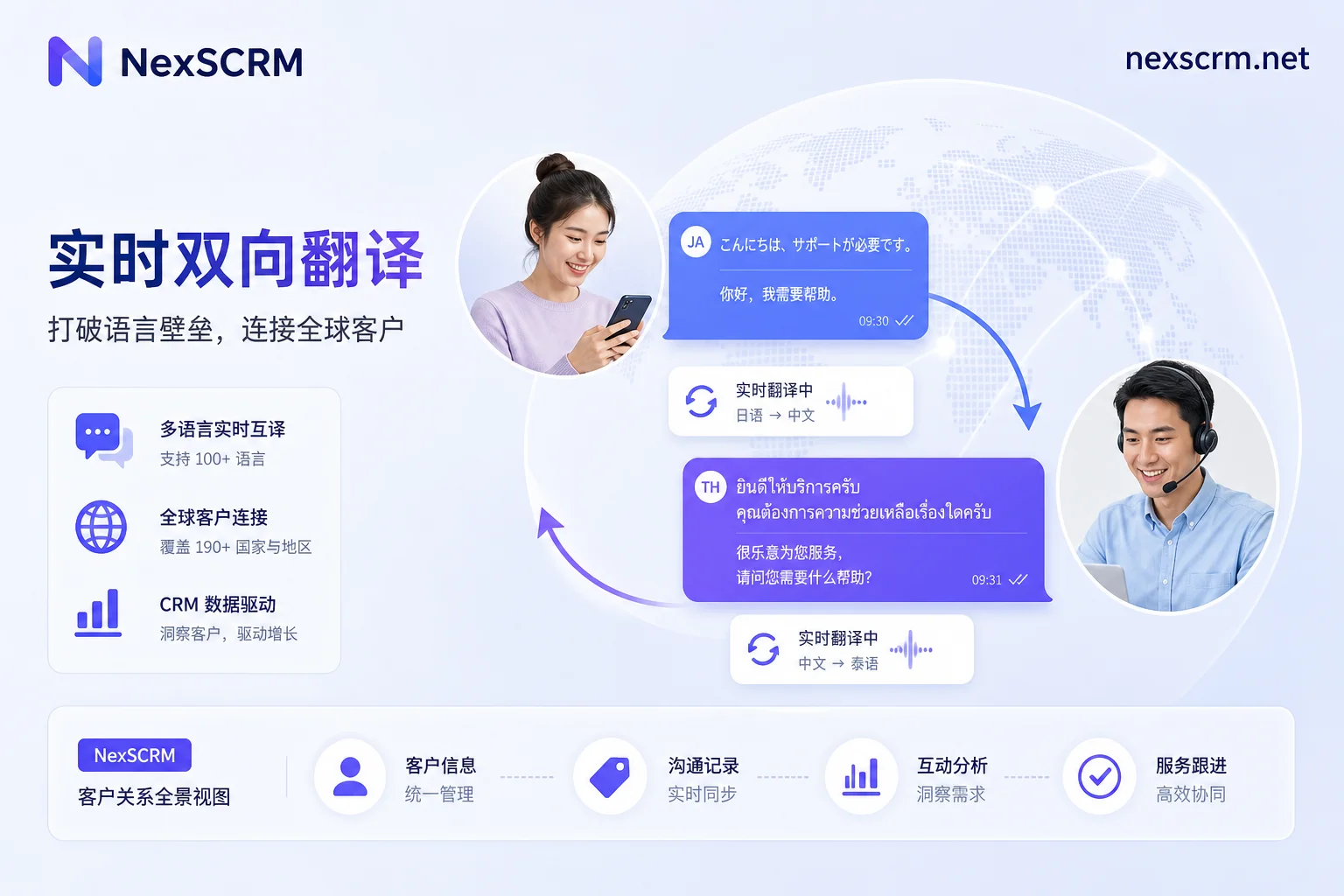
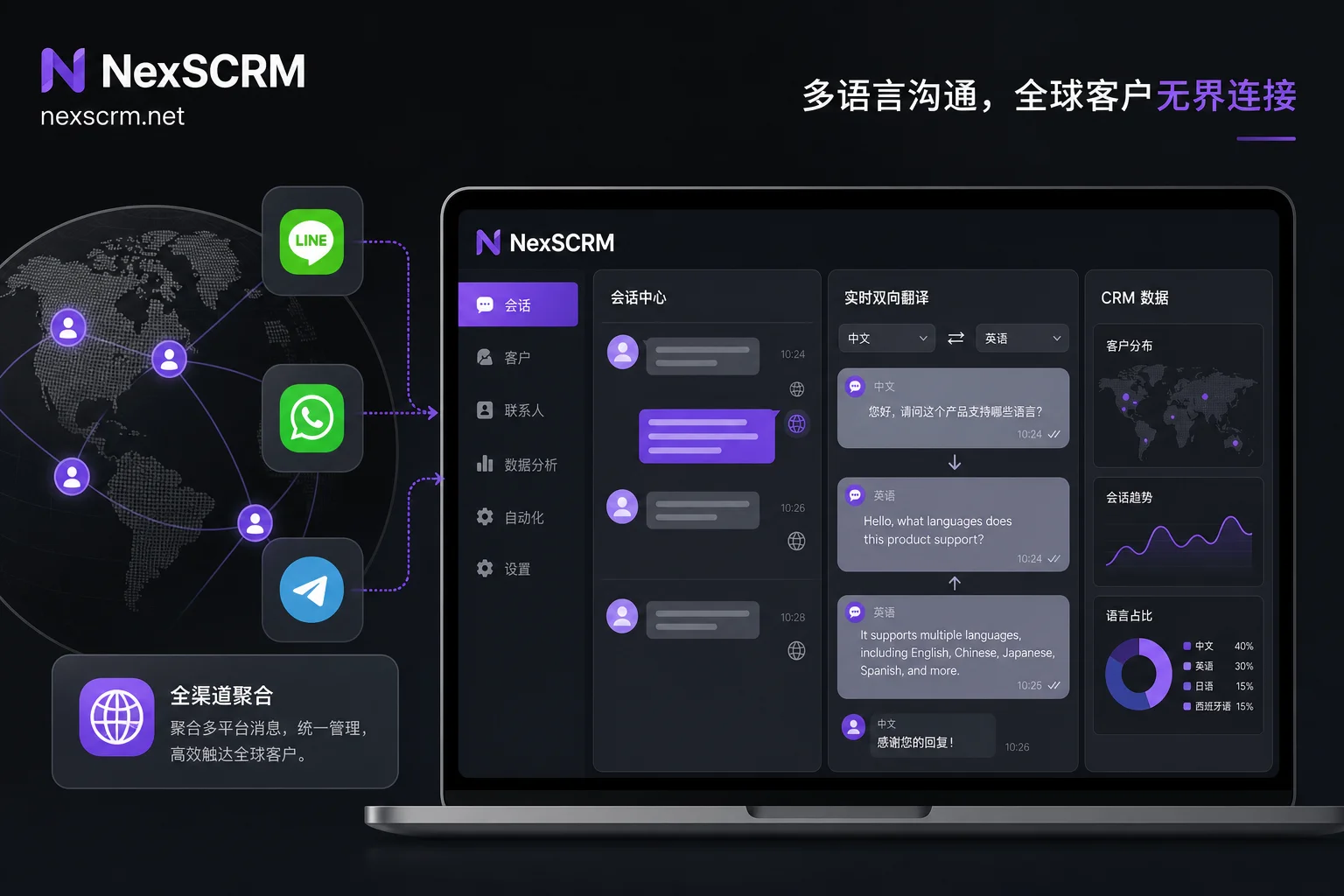
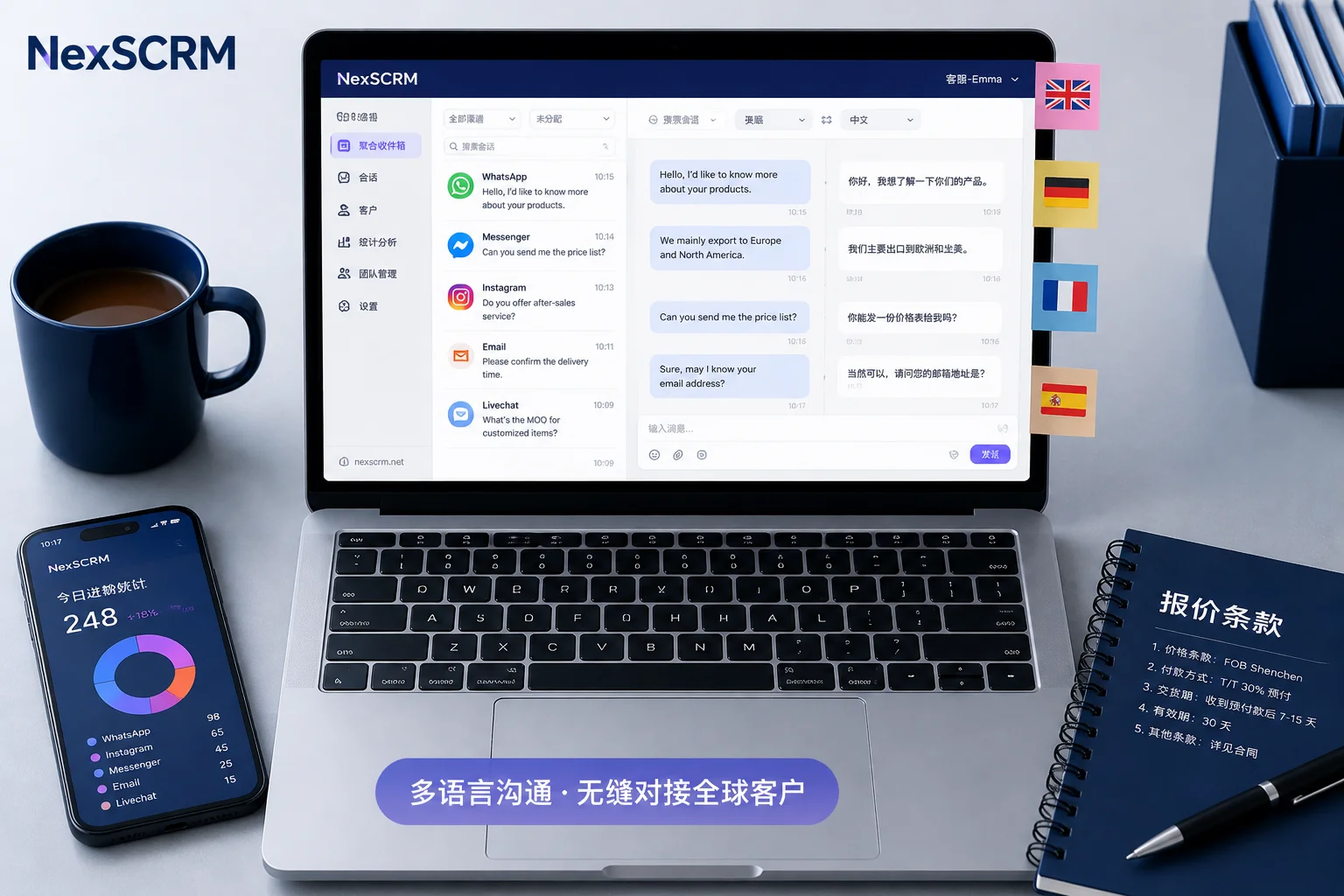
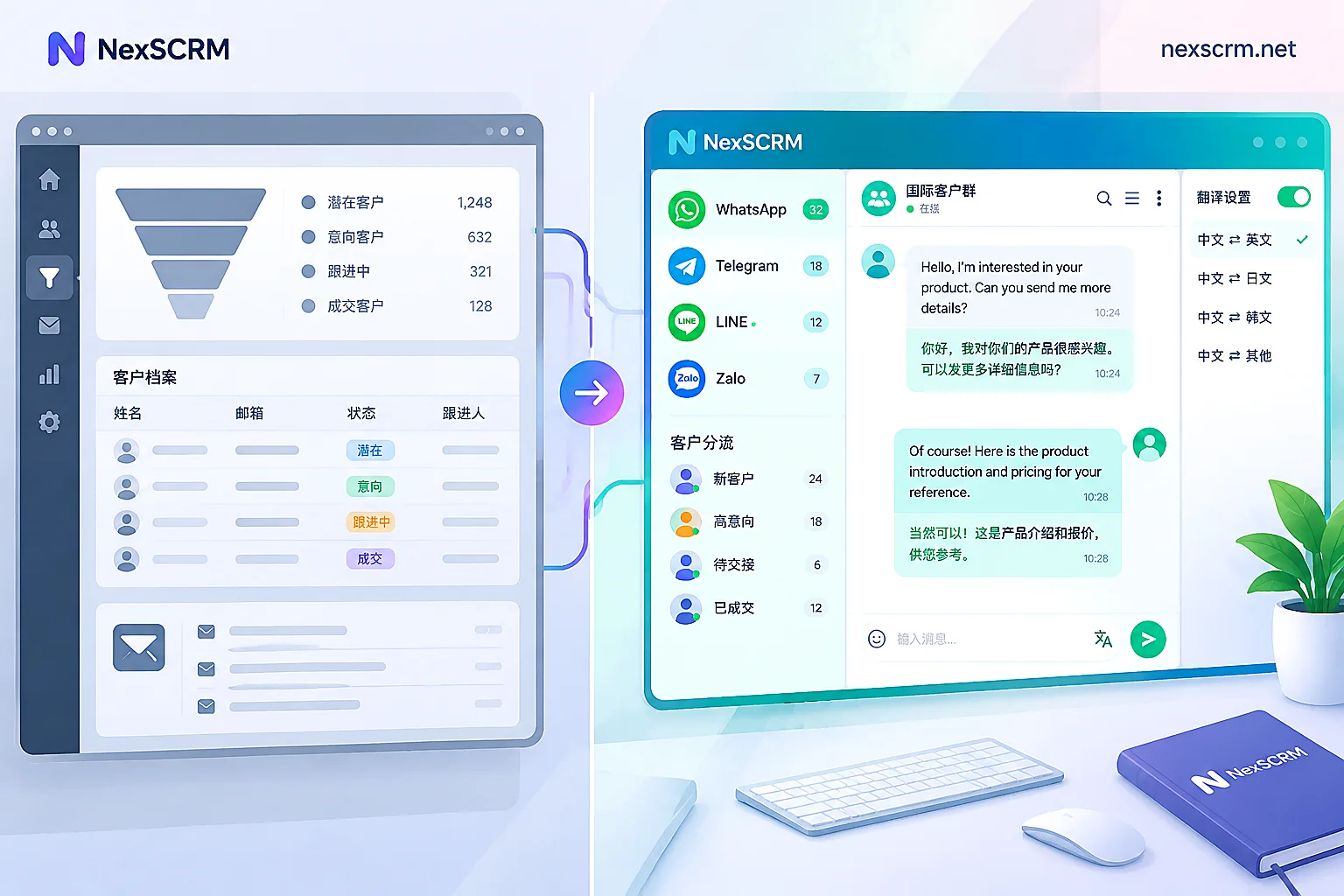
In the customer service workbench, when Southeast Asian or Japanese customers send foreign language messages, the system accurately identifies and automatically presents Chinese translations; after agents input Chinese replies, the system converts them to the target language in real time, ensuring smooth communication as if using a native language.
2. Multi-Platform Multi-Account Aggregation and Independent Environment Isolation
The platform supports aggregating mainstream overseas social media accounts such as WhatsApp, Telegram, LINE, and Zalo into one panel for unified handling. Combined with independent environment isolation mechanisms, it prevents multi-account login interference and protects team assets.
3. AI-Assisted Replies and Data Asset Accumulation
With AI-assisted reply scenarios and quick phrase libraries, frontline agents can generate standardized cross-language solutions with one click. The system also automatically performs message backup and marketing data statistics, helping teams accurately measure conversion performance across different language markets.
4. NexSCRM Brand Interaction and Efficient Operations Recommendations
When advancing the multilingual upgrade of LINE private domain operations, it is recommended that teams follow the principle of "step-by-step progress, privacy-first":
- Build a Standardized Dictionary for Minority Languages: Organize high-frequency FAQs, after-sales terms, and product specifications, and configure proper nouns in the translation system to reduce AI misinterpretation.
- Properly Use Independent Environments and Backups: Standardize agent login permissions, enable full message backups, and prevent data discontinuity caused by personnel turnover.
- Maintain Compliance and User Authorization: Strictly abide by platform rules, prohibit unauthorized harassment marketing or data scraping, and win overseas buyers' trust with genuine, high-quality customer experience.
Reader Interaction Summary: If your team is using NexSCRM to expand LINE and multi-channel overseas private domains, you can set up dedicated AI templates for the Thai and Japanese markets in the backend to further improve conversation handling efficiency during peak periods.
Action Suggestion: Evaluate your customer service team's average response time and multilingual translation accuracy. If you need to improve cross-border communication efficiency and team collaboration experience, visit the official website to learn about the platform's overall implementation solutions for LINE real-time two-way translation and multi-account aggregation management.


Comments(0)